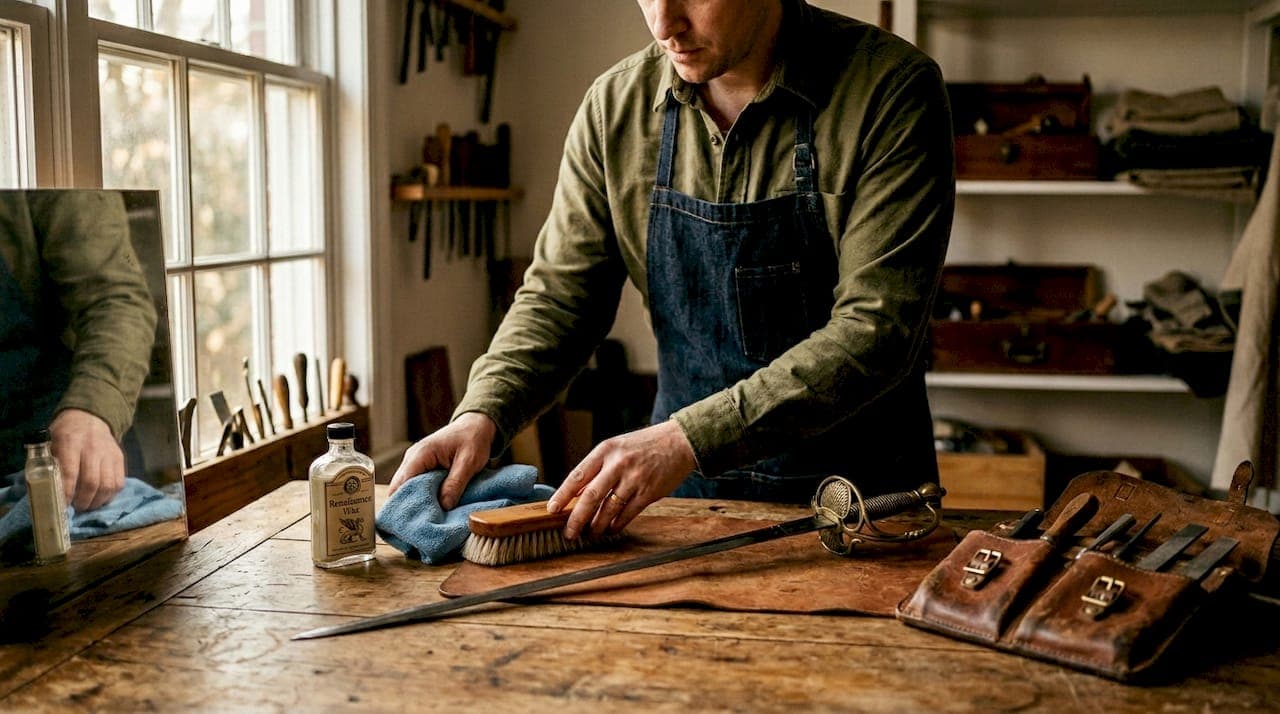
A sword can survive centuries of war, change hands across continents, and still fall apart in a collector's closet from something as preventable as humidity. This sword maintenance guide exists because most owners genuinely try to care for their blades but work from incomplete or misleading information. They oil the blade and consider the job done. Then they find rust two months later. Proper sword maintenance involves a specific workflow, the right products, correct environmental controls, and knowing when your hands are not the right ones for the job. Follow this guide and your collection will last generations.
Table of Contents
- Essential tools and preparation for sword maintenance
- Step-by-step sword cleaning and preservation process
- Optimal storage conditions to preserve sword value and integrity
- When to seek professional restoration and common maintenance mistakes to avoid
- The overlooked dangers of improper sword care and expert advice from conservators
- Explore expertly crafted swords and professional maintenance products
- Frequently asked questions
Key Takeaways
| Point | Details |
|---|---|
| Proper preparation | Use correct tools and gloves before cleaning to avoid damaging sword surfaces. |
| Cleaning and preserving | Follow controlled cleaning steps and apply thin protective coatings to prevent corrosion. |
| Storage conditions | Maintain stable temperature and humidity within recommended ranges to preserve swords. |
| Professional intervention | Identify signs needing expert care to protect valuable or damaged swords. |
| Avoid common mistakes | Do not use WD-40 or abrasive polishes for long-term sword maintenance. |
Essential tools and preparation for sword maintenance
Having the right tools and preparation is essential before you begin cleaning your sword. Skipping this step is how people cause more damage in thirty minutes than neglect does in five years.
Your core toolkit should include microfiber cloths for general surface work, natural-bristle brushes for reaching engraving and guard crevices, cotton swabs for controlled wet cleaning, and a 10x loupe or magnifier for inspecting blade surfaces before and after treatment. These are not optional extras. They are the baseline.
For preservation products, the professional standard is Renaissance Wax, a microcrystalline wax originally developed for museum conservation. It forms a stable, chemically neutral barrier without reacting with metal or organic materials. Mineral oil (food-grade or pharmaceutical grade) works well for carbon steel blades. Isopropyl alcohol at 70% concentration is your mild solvent for removing oils and residues before waxing. As the principle goes in collectible conservation, tool and product selection separates careful preservation from irreversible damage, and less is always more.
Products to avoid completely:
- Steel wool or abrasive pads of any kind
- Commercial metal polishes with abrasives (Brasso, Flitz on aged surfaces)
- WD-40 as a long-term protectant
- Bleach, vinegar, or any acidic household cleaner
- Leather conditioners on the blade itself
| Tool or product | Safe to use | Notes |
|---|---|---|
| Microfiber cloth | Yes | Lint-free, non-abrasive |
| Renaissance Wax | Yes | Museum-grade standard |
| Mineral oil | Yes | Thin application only |
| WD-40 | No | Attracts dust, degrades over time |
| Steel wool | No | Removes patina and finish irreversibly |
| Isopropyl alcohol (70%) | Yes | Pre-wax surface prep only |
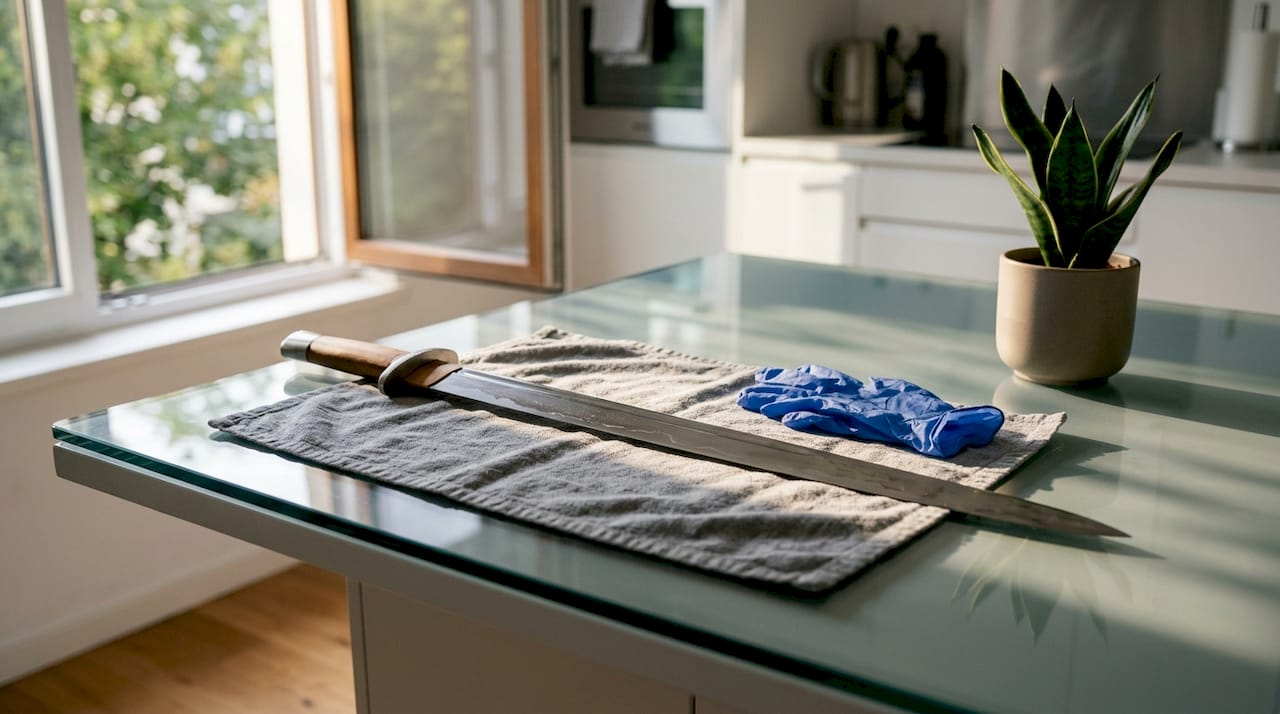
Workspace setup matters more than most collectors realize. Work on a clean padded surface, ideally a folded cotton towel over a flat table. Good lighting, ideally a lamp positioned at a low angle, reveals surface texture and defects that overhead light misses entirely.
Pro Tip: Always wear nitrile gloves during handling. Skin oils transfer to blade surfaces within seconds and begin the oxidation process immediately. Latex gloves can leave sulfur compounds that react with some metals, so nitrile is the correct choice. For expert maintenance tips covering specific blade types, bookmark that resource for later.
Step-by-step sword cleaning and preservation process
With tools and workspace ready, follow this precise cleaning and preservation routine for best results. The order matters as much as the products.
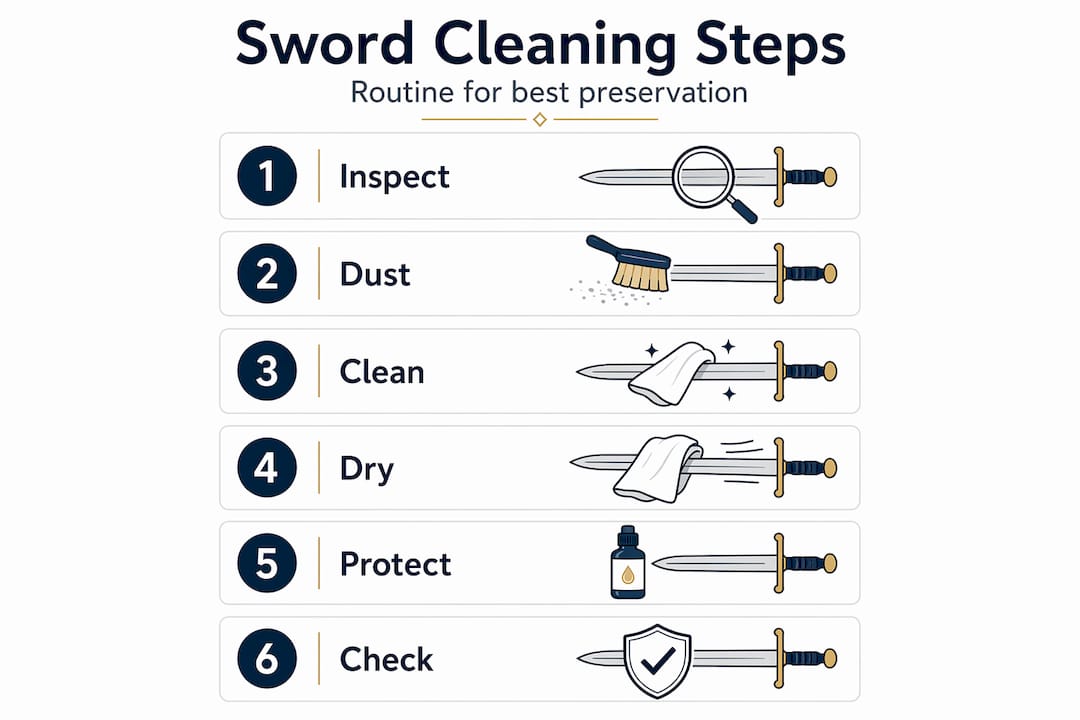
Step 1: Visual inspection. Before touching the blade with anything wet, spend five minutes examining the entire surface under magnification. Note areas of active rust (orange, powdery), stable patina (dark gray or brown, smooth), engraving condition, and any cracks in wood or horn fittings.
Step 2: Dry dust removal. Use a natural-bristle brush moving in one direction only, from spine toward edge or from hilt toward tip. Never scrub back and forth. This prevents microscopic scratches from trapped particles.
Step 3: Controlled wet cleaning. Dampen (not saturate) a cotton swab with isopropyl alcohol and work in small 2-inch sections. The key word in sword maintenance basics is controlled. You are lifting contamination, not scrubbing the surface. As conservation research confirms, cleaning removes contaminants while preservation protects without altering original surfaces, and thin protective film application is what distinguishes the two steps.
Step 4: Dry thoroughly. Allow the blade to air dry at room temperature for at least 20 minutes before any protective application. Never use a heat gun or hair dryer. Heat causes differential expansion in layered blades and can crack organic hilt materials like wood or stag.
Step 5: Apply protective coating. For Renaissance Wax, apply a very thin layer with a cotton pad using light circular motions. Buff off with a clean microfiber cloth after 3 to 5 minutes. The goal is a film you can barely see. For mineral oil on carbon steel, one drop per 6 inches of blade, spread and then wiped back until only a faint sheen remains.
Step 6: Inspect again. A second pass under magnification confirms even coverage and catches any areas you may have missed.
Pro Tip: Avoid forced drying with heat or compressed air. Both drive moisture into porous materials rather than allowing it to evaporate naturally. The two hours you save can cost you a cracked handle or a delaminated blade.
Common mistakes that ruin blades:
- Over-applying oil until it pools in the fuller or around the guard
- Cleaning historical patina off a blade thinking it is dirt (this destroys provenance and value)
- Using the wrong solvent on lacquered or painted scabbards
- Skipping the inspection step and missing early-stage rust
For guidance on handling your blade safely during these steps, the safe sword handling tips resource covers grip, positioning, and injury prevention in detail.
Optimal storage conditions to preserve sword value and integrity
After cleaning and preserving your sword, proper storage is the next crucial step to maintain its condition. This is where most collectors lose ground they gained through careful cleaning.
The most important variable is humidity stability, not humidity elimination. A stable temperature between 60 and 68°F (16 to 20°C) combined with relative humidity kept between 45% and 55% prevents both condensation-driven rust on metal and the cracking that dry air causes in wood, ivory, and bone fittings.
Storage best practices:
- Use natural cotton blade bags or sleeves, never synthetic fabrics or leather cases that trap moisture against the blade
- Store horizontally on velvet-lined wooden supports or vertically with the blade pointing down to prevent oil migration into the hilt
- Keep swords away from exterior walls, which experience greater temperature fluctuation
- Use a digital hygrometer (not the cheap analog dial type) inside your storage cabinet to monitor actual conditions
- Place silica gel desiccant packets inside storage cases and replace or regenerate them every three months
Sword display tips for pieces on open racks deserve special attention. Direct UV exposure from windows fades wood finishes, degrades ivory, and causes lacquered scabbards to peel within two years. Position display mounts away from windows or use UV-filtering acrylic glazing on display cases. Sword display ideas like wall-mounted horizontal brackets are fine as long as the support material is padded and non-reactive.
| Environmental factor | Safe range | Risk if out of range |
|---|---|---|
| Temperature | 60–68°F (16–20°C) | Condensation rust, thermal cracking |
| Relative humidity | 45–55% | Corrosion (high) or cracking (low) |
| UV exposure | Minimal or filtered | Finish fading, organic material degradation |
| Air circulation | Gentle, consistent | Stagnant air traps moisture |
Pro Tip: Never store swords in the same space as ammunition, petroleum-based solvents, or cleaning chemicals. Vapor off-gassing from these materials is enough to initiate corrosion on unprotected metal surfaces, even with the blade oiled.
For a reference list of what a well-maintained collection should include, the collectible swords checklist covers the essentials.
When to seek professional restoration and common maintenance mistakes to avoid
Understanding when to call in experts and what pitfalls to avoid will protect your sword collection from the kind of damage that no future cleaning can fix.
Signs you need a professional conservator:
- Deep pitting that creates visible craters in the metal surface
- Cracks in the grip wood, especially extending toward the tang
- Insect damage (powderpost beetles are devastating to wooden handles and scabbards)
- Worn or lifting inlays in gold, silver, or other precious materials
- Blade flexion problems or a loose tang that cannot be tightened without disassembly
For swords valued above five figures or with historical significance, professional help is essential for deep corrosion, precious inlay deterioration, or mechanical damage. Attempting DIY fixes on these pieces risks destroying the very qualities that make them valuable.
"If you cannot confidently distinguish between patina and rust, do not intervene. Consult a professional conservator."
This is not overcaution. Patina is a stable oxide layer that forms over decades and serves as the blade's natural protection. Removing it exposes bare metal that will rust faster than the original surface would have. The difference looks subtle under poor lighting and obvious under a loupe. If you are uncertain, you are not ready to intervene.
Mistakes that cause permanent damage:
- DIY disassembly without knowledge of peen construction or threaded fittings, which strips metal and misaligns components
- Using WD-40 as a preservation product (it is a water displacer, not a conservator's lubricant)
- Polishing away historical surface evidence that affects appraisal and provenance
- Skipping photo documentation before any treatment, which matters enormously for insurance claims
Pro Tip: Photograph your sword under consistent lighting before any maintenance session. Front, back, close-ups of the guard and pommel, and the scabbard interior if accessible. This takes ten minutes and creates a condition record that insurers, appraisers, and conservators will thank you for.
Learning to identify quality swords also helps you understand what specific features on your blade need the most protection.
The overlooked dangers of improper sword care and expert advice from conservators
Most sword maintenance guides give you a cleaning checklist and stop there. That is useful, but it misses the insight that professional conservators repeat consistently: the environment your sword lives in does more damage than any single cleaning mistake.
Temperature swings cause condensation rust even in blades that have been freshly oiled, which is why a stable environment with 45 to 55% relative humidity is not optional but foundational. An oiled blade moved from a cool basement to a warm display room will pull moisture from the air onto its surface. That moisture sits beneath the oil film. The blade looks protected. It is rusting anyway.
The second thing conservators emphasize is the difference between cleaning and preserving. Most collectors clean when they should preserve. Cleaning removes surface material. Preservation locks existing conditions in place. Over-cleaning aged blades removes the very surface chemistry that has been stabilizing the metal for decades. Professional conservators operate on a principle of minimal intervention: do as little as necessary to stabilize the piece, not to make it look new.
The third underestimated issue is product substitution. Collectors often reach for cheaper waxes or hardware-store oils thinking the difference is marginal. Renaissance Wax costs more than furniture wax for a reason. Its pH neutrality, chemical stability, and non-reactive properties are tested specifically against metal and organic conservation materials. Cheaper alternatives can be acidic, can polymerize over time into hard films that are difficult to remove, or can react with blade finishes in ways that only become visible after two or three years.
Finally, the tension between functional use and display preservation is real and requires an honest choice. A blade you intend to use needs different conditioning than a display piece. Functional edges need sharper attention to lubrication and edge geometry, while display pieces prioritize surface stability. Trying to manage both with a single routine usually serves neither well. For further reference on building a sound care approach, the expert sword maintenance guide goes deeper on blade-specific strategies.
Explore expertly crafted swords and professional maintenance products
Apply your maintenance knowledge with quality swords and care products designed for collectors and enthusiasts.
Every sword in your collection deserves a care routine matched to its construction. Damascus steel, in particular, rewards proper maintenance with striking visual depth as the pattern develops over time.

At TopSwords, you will find handcrafted pieces built to be collected and preserved for years. The custom handmade Damascus steel battle sword with leather sheath is a standout for collectors who want a functional centerpiece with genuine craft behind it. For something with more visual drama, the handmade Damascus steel scimitar sword pairs beautifully with a wall-mounted horizontal display. You can also pick up the Damascus steel battle sword leather sheath separately to ensure proper blade protection during storage.
- Custom Damascus steel battle swords with leather sheaths
- Handmade Damascus steel scimitar swords
- Leather sheaths and display-ready accessories
- Maintenance-ready blades built for long-term collector ownership
Frequently asked questions
How often should I perform maintenance on my sword?
Inspect and perform light maintenance at least once a year, covering cleaning, lubrication checks, and storage condition verification, though high-humidity environments or frequently handled pieces may need quarterly attention.
Can I use WD-40 for long-term sword preservation?
No. WD-40 accelerates corrosion over time by attracting dust, degrading finishes, and leaving a residue that traps moisture against the blade surface.
What environmental conditions are ideal for storing swords?
Store swords at 60 to 68°F with 45 to 55% relative humidity, away from direct sunlight, exterior walls, and any source of chemical vapors.
When should I seek professional restoration for my sword?
Seek a certified conservator when you see deep pitting, inlay deterioration, structural cracks in the hilt, or when the piece carries significant monetary or historical value that DIY work could compromise.