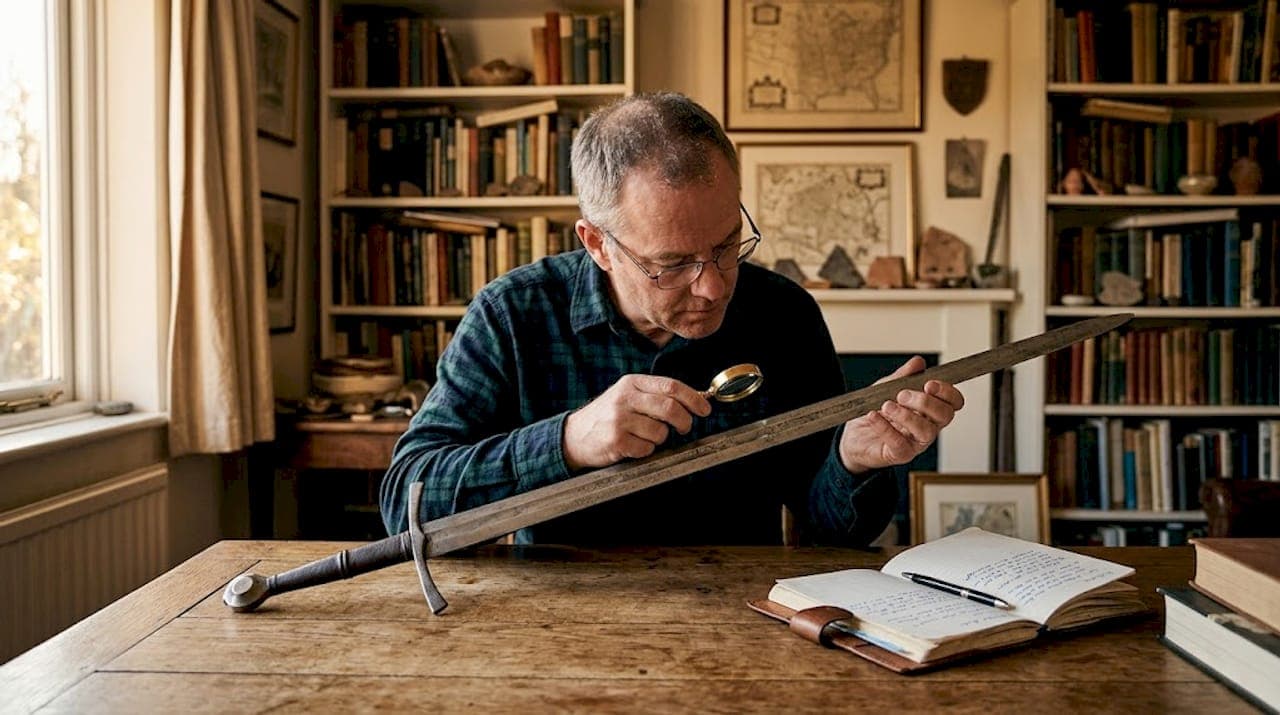
You finally track down a sword that looks perfect online. The photos show a gleaming blade with a beautiful pattern, a solid hilt, and what appears to be genuine Damascus steel. It arrives, and something feels off. The balance is wrong, the pattern looks printed rather than forged, and the tang rattles inside the handle. This scenario plays out more often than most collectors expect. Whether you're building a display collection, sourcing props for cosplay, or hunting for a functional piece, knowing how to judge sword quality before you buy can save you serious money and frustration. This guide gives you the expert-backed steps to assess any sword with confidence.
Table of Contents
- Understanding the essentials: What makes a quality sword?
- Step 1: Gather tools and information
- Step 2: Inspecting the sword — Physical and visual checks
- Step 3: Performance testing and confirmation
- Troubleshooting: Common pitfalls and mistakes
- A collector's perspective: Expert lessons for buying swords with confidence
- Discover top-quality swords for your collection or cosplay
- Frequently asked questions
Key Takeaways
| Point | Details |
|---|---|
| Check materials and build | Quality swords use the right steel and construction, with visible layers and secure tangs. |
| Verify documentation | Provenance papers, expert appraisals, and certificates help confirm authenticity. |
| Test performance (where safe) | For modern swords, assess flexibility and point of balance to judge quality before buying. |
| Avoid common pitfalls | Watch for acid-etched fakes and always consult resources or experts if you’re unsure. |
Understanding the essentials: What makes a quality sword?
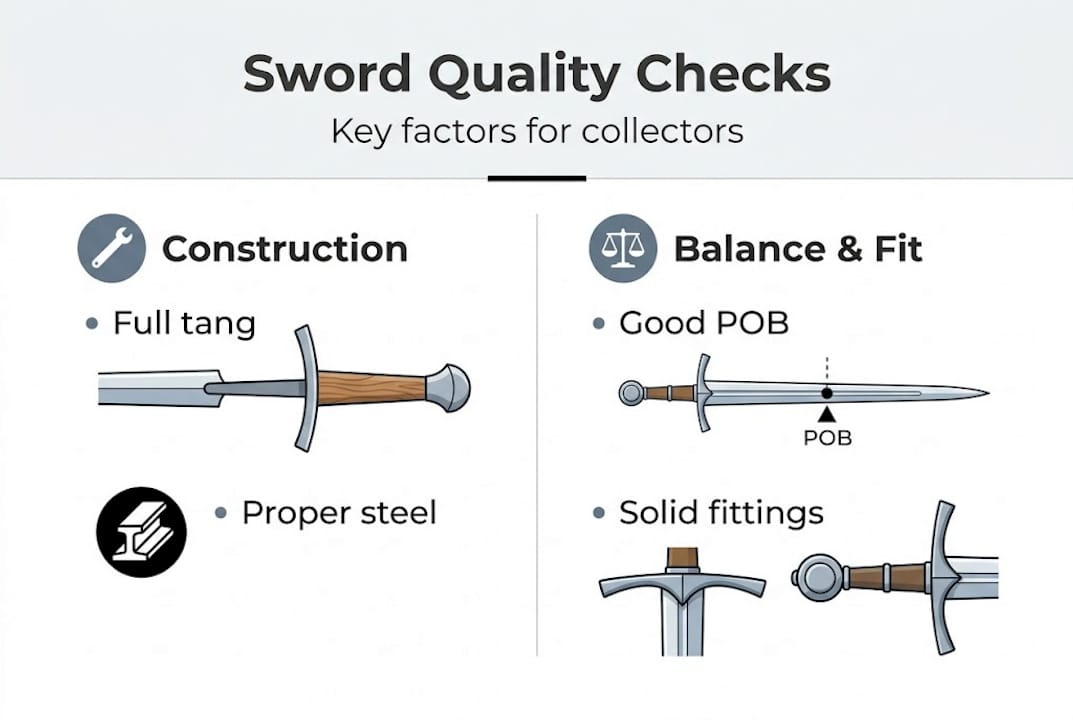
Before you can spot a poor sword, you need to understand what a great one looks like. Every sword shares the same basic anatomy: the blade (the cutting portion), the tang (the steel extension that runs into the handle), the hilt (the guard and grip assembly), and the pommel (the weighted end cap). Each part plays a role in the sword's overall performance and durability.
Material is everything. High-carbon steel (typically 1045, 1060, or 1095 grade) is the standard for functional swords, while stainless steel works for display pieces. Damascus steel swords are prized for their layered construction, and pattern-welded blades show layering under magnification, which is a key authenticity marker.
Core features of a quality sword:
- Balance: The point of balance (POB) should sit about 3 to 5 inches from the guard on most swords
- Weight: Appropriate for the sword type, not artificially heavy or suspiciously light
- Flex: Functional blades should have controlled flex without permanent bending
- Fit and finish: No gaps between hilt components, no rough grinding marks
- Symmetry: Blade edges should be even, tip centered
- Full tang: The tang should run the full length of the handle for structural integrity
| Sword type | Key quality checks |
|---|---|
| Medieval broadsword | Full tang, high-carbon steel, proper POB |
| Katana | Differential hardening, visible hamon, tight fittings |
| Rapier | Slender flexible blade, complex guard, light weight |
| Claymore | Long full tang, crossguard alignment, grip wrap quality |
| Short sword | Compact balance, short sword features like scabbard fit |
Pro Tip: Watch out for acid-etched "Damascus" patterns. Real Damascus or pattern-welded steel shows three-dimensional layering you can feel with a fingertip. A printed or acid-etched surface looks flat and uniform under a magnifier. A Richard the Lionheart sword from a reputable maker, for example, will have clear construction details that a tourist replica simply cannot replicate.
Always match the sword type to its intended use. A display piece can tolerate stainless steel. A cutting sword cannot.
Step 1: Gather tools and information
With a foundation in sword quality features, the next step is to prepare for hands-on assessment. Going in unprepared is one of the most common reasons collectors get burned.
Tools you need for sword inspection:
- 10x magnifier or loupe for examining blade surfaces and hamon lines
- Flashlight to reveal grinding marks, pitting, or uneven bevels
- Cotton gloves to protect both you and the blade from oils
- Measuring tape to verify blade length, weight, and POB against specifications
- Reference books or trusted databases to cross-check markings and maker stamps
- Camera or smartphone to document findings for later expert review
Documentation matters differently depending on what you're buying.
| Factor | Antique sword | Modern production sword |
|---|---|---|
| Provenance | Essential, verify chain of ownership | Manufacturer certificate preferred |
| Appraisal | Expert metallurgical appraisal recommended | Customer reviews and maker reputation |
| Paperwork | Historical records, auction house docs | Warranty, spec sheet, COA |
| Verification | provenance in sword collecting is critical | Online forums, maker's track record |
For authentic historical swords, provenance documents and expert appraisal are essential to confirm you're not buying a reproduction sold as an original. A sword and scabbard set from a reputable maker will typically include clear documentation and material specifications.
If paperwork seems vague or the seller can't answer basic questions about steel type or construction method, treat that as a red flag. Expert appraisers can often identify fakes within minutes using tools you may not have access to at home.
Step 2: Inspecting the sword — Physical and visual checks
With your tools and references ready, you're set to begin a thorough physical evaluation. This is where most quality issues reveal themselves.
Step-by-step inspection process:
- Overall condition: Look for rust, pitting, cracks, or uneven surface finishing along the entire blade
- Blade straightness: Sight down the blade from pommel to tip; any curve or warp is a serious defect
- Balance check: Hold the sword at the guard and feel where the weight settles
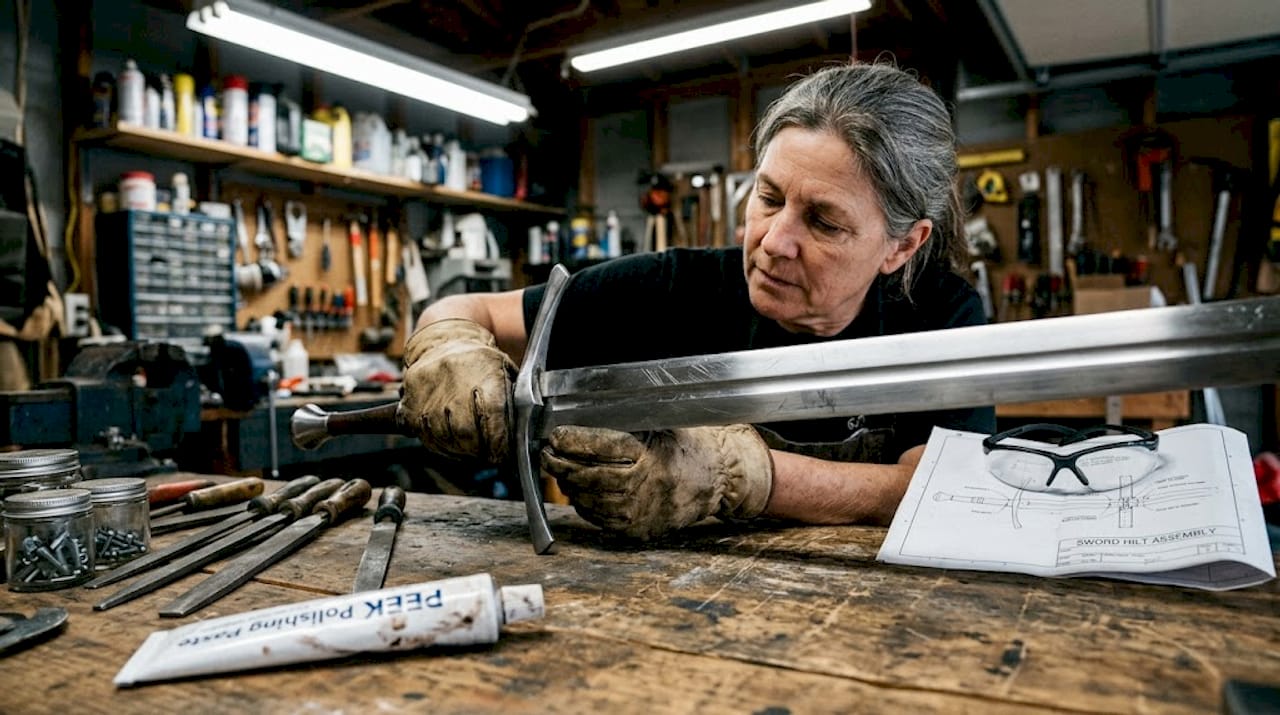
- Tang inspection: If possible, remove the pommel nut and check that the tang runs full length and isn't welded or rat-tail style on a sword claiming full-tang construction
- Hilt construction: Grip should be firmly attached, guard should not wobble, pommel should be threaded or peened securely
- Fit of parts: No visible gaps between guard, grip, and pommel
Spotting fake hamon lines is a skill worth developing. A real hamon (the temper line on a differentially hardened blade) has an organic, irregular appearance. Natural hamon lines are not acid-etched and show subtle activity and depth under magnification.
Pro Tip: Shine a flashlight at a low angle across the blade surface. Acid-etched patterns look shallow and uniform. Real differential hardening creates a visible transition zone with texture and depth that catches light differently.
Safety note: Always handle an unfamiliar sword with cotton gloves and keep the blade pointed away from people. Never test an edge on your skin or clothing. If you're unsure about a sword's structural integrity, do not flex or swing it until a professional has assessed it.
A Claymore example from a quality maker will show clean, consistent grinding, a solid crossguard, and a handle that doesn't shift under pressure. Photograph every component for your records before committing to a purchase.
Step 3: Performance testing and confirmation
After your thorough inspection, performance testing helps confirm your impressions. The tests you can safely run depend entirely on whether the sword is an antique or a modern piece.
Practical tests for modern functional swords:
- Flex test: Gently press the tip against a padded surface and observe controlled spring-back without permanent deformation
- Point of balance: Measure POB from the guard; compare against the maker's published specs
- Edge sharpness: Use a fingernail test (drag the nail lightly across the edge) rather than a paper cut test for safety
- Sound of blade: A quality blade rings clearly when tapped; a dull thud can indicate poor steel or internal flaws
- Tang visibility: On swords with removable pommels, inspect the tang for full length and proper peening
| Sword type | Expected POB | Flex behavior | Edge standard |
|---|---|---|---|
| Katana | 3 to 5 inches from guard | Minimal flex, rigid | Razor sharp |
| Rapier | 4 to 6 inches from guard | Noticeable flex | Sharp point primary |
| Medieval broadsword | 3 to 5 inches from guard | Moderate flex | Sharp cutting edge |
| Cavalry saber | 4 to 7 inches from guard | Curved flex | Single edge sharp |
Antiques need scientific verification; modern functional swords emphasize performance metrics like flex and POB over historical accuracy. Never attempt sharpness or flex tests on antiques. A fantasy sword for cosplay has different performance expectations than a cavalry sword replica built for reenactment use, so always match your testing approach to the sword's purpose.
If results are inconclusive, third-party lab reports or expert metallurgical analysis can confirm steel composition and construction quality definitively.
Troubleshooting: Common pitfalls and mistakes
Despite best efforts, many collectors and enthusiasts fall into common traps. Here's how to avoid them.
Top pitfalls to watch for:
- Trusting acid-etched Damascus patterns: Many sellers pass off chemically etched steel as genuine pattern-welded Damascus. Always verify with magnification
- Ignoring the tang: A rat-tail tang (a thin rod welded to the blade) is a major structural weakness and a common sign of a budget piece sold as premium
- Buying on looks alone: A beautiful finish can hide poor steel, bad heat treatment, or a hollow handle
- Trusting unverified provenance: A certificate of authenticity printed by the seller means nothing without independent verification
- Assuming price equals quality: High price tags appear on both genuine pieces and convincing fakes
Replicas made for tourist markets or low-cost cosplay use often feature cast zinc or pot-metal fittings, stainless blades with no heat treatment, and decorative etchings that mimic historical patterns. A European sword replica built to collector standards will have verifiable steel specs and solid construction that a tourist piece simply cannot match.
The popular misconception that any wavy-patterned blade is "real Damascus" is widespread. Provenance docs, metallurgical tests, and expert appraisals are necessary to distinguish fakes from the genuine article.
Pro Tip: Join active sword collector forums like SBG (Sword Buyers Guide) or attend regional sword shows. Peer review from experienced collectors is one of the fastest ways to catch fakes that fool even careful buyers.
A collector's perspective: Expert lessons for buying swords with confidence
Here's something most buying guides won't tell you: even reputable sellers sometimes carry swords of questionable authenticity, not always out of dishonesty, but because the supply chain for collectible blades is genuinely difficult to audit. A seller can believe a piece is authentic and still be wrong.
The conventional approach of trusting a sword's story or its visual appeal is not enough. Appearance is the easiest thing to fake. What's hard to fake is grain structure, a properly peened full tang, and documented metallurgical history. Antiques need scientific verification, while modern functional swords should be evaluated against clear performance benchmarks rather than romantic descriptions.
Our hard-won advice: be skeptical of any sword whose seller cannot answer basic questions about steel grade, heat treatment, and tang construction. Cross-reference claims against peer-reviewed metallurgical sources and collector communities. The best collections are built on verification, not faith.
Discover top-quality swords for your collection or cosplay
Ready to find your own high-quality sword? Explore trusted options below.
At TopSwords, every blade in our catalog is selected for craftsmanship, material integrity, and honest representation of what you're buying. Whether you're after a battle-ready piece or a stunning display sword, we make it easy to find exactly what fits your collection.
Browse our quality swords with scabbard for complete collector sets, explore the striking Damascus gladiator sword for a centerpiece piece, or check out our fantasy medieval sword for cosplay-ready options. Each product includes full material specs so you can apply everything you've learned here before you buy.
Frequently asked questions
What is the most reliable way to spot a fake sword?
Inspect the tang for full-length construction, check blade surfaces under magnification for acid-etched patterns, and request provenance documentation or an independent expert appraisal. Pattern-welded blades show layering under magnification that fakes cannot replicate.
Are all Damascus swords considered high quality?
No. Authentic Damascus or pattern-welded steel shows wave-like, three-dimensional layering visible under magnification, but many replicas use superficial acid etching that mimics the look without the structural benefit. Always verify with a loupe before buying.
Is it safe to test an antique sword's blade for sharpness?
No. Physical sharpness or flex tests on antiques can permanently damage the piece and reduce its value significantly. Stick to visual inspection and commission scientific verification from a qualified metallurgist instead.
Do functional swords require different checks compared to display-only swords?
Yes. Functional swords must pass flex, point of balance, and material integrity checks since they face real stress in use. Display swords can prioritize visual finish and symmetry, though performance metrics like flex and POB remain useful benchmarks even for collectors.