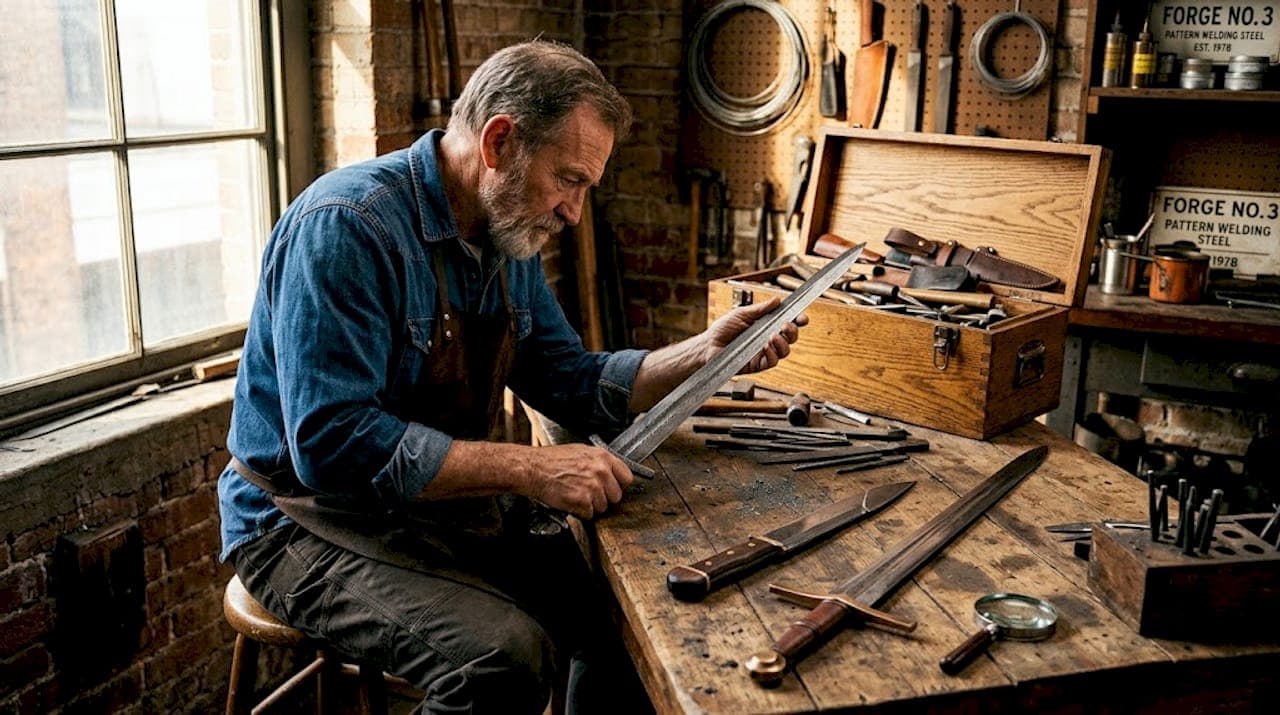
Every collector reaches the same frustrating wall: you browse through hundreds of blades, and most of them look identical. Same finish, same shape, same feel. Finding a sword that genuinely stops you cold, one that carries real artistry, historical weight, and unmistakable craftsmanship, is harder than it sounds. This guide breaks down exactly what separates a distinctive blade from a forgettable one, covering materials, forging techniques, design philosophy, and how to match a sword to your specific collecting goals. Whether you're building a display collection, gearing up for cosplay, or chasing something that simply cannot be replicated, the framework here will sharpen your eye and your decisions.
Table of Contents
- What defines a unique sword design?
- Iconic sword designs: Highlights and features
- Comparing sword design techniques: Functional vs. artistic
- Choosing the right sword: Collector and cosplay recommendations
- Why true uniqueness requires more than artistic patterns
- Discover modern masterpieces for your collection
- Frequently asked questions
Key Takeaways
| Point | Details |
|---|---|
| Material matters most | Swords forged with layered steels deliver both strength and visual uniqueness. |
| Historical quirks add value | Features like double fullers and pattern remnants elevate a sword’s collector appeal. |
| Balance art and function | The best unique swords combine visual flair with proven durability and handling. |
| Choose for your purpose | Match your blade’s design to display, collection, or cosplay needs for maximum satisfaction. |
What defines a unique sword design?
Uniqueness in a sword isn't accidental. It's the result of specific choices made at every stage of creation, from the raw metal selected to the final acid etch on the blade surface. Collectors who can articulate what they value have a major advantage over those who simply react to aesthetics.
Material is where it starts. The two dominant categories in collector-grade blades are pattern-welded Damascus steel and homogeneous modern alloys. Both have merit, but they serve different goals. As research on Damascus steel production explains, pattern-welded Damascus excels in combining hardness and toughness through layered steels, though modern homogeneous alloys may outperform it in consistency. The trade-off is real: Damascus is labor-intensive, which drives costs up and quantities down, and that scarcity is part of what collectors prize.
Beyond materials, historical technique versus modern method shapes a sword's identity. A blade forged using centuries-old methods carries process marks that modern CNC-machined versions cannot replicate. Hammer marks, subtle asymmetries, and the organic flow of hand-ground bevels are not flaws. They are signatures. Collectors who understand this read those marks the same way a wine enthusiast reads terroir.
Here's what separates truly unique blades from decorative ones:
- Pattern complexity: The number of folds, the manipulation technique (twist, ladder, chevron), and the acid etching process all determine how distinctive the surface pattern is
- Hilt craftsmanship: A beautiful blade paired with a mass-produced handle undercuts the whole piece; unique swords feature matching quality throughout
- Historical reference accuracy: Replicas grounded in real artifacts carry more weight than purely invented designs
- Labor investment: Hand-forging, hand-grinding, and hand-finishing take time that shows in the final result
"A sword with 200 hours of skilled labor behind it will always tell a different story than one built in 20 minutes by a machine. The collector's job is learning to hear that story."
Pro Tip: Before purchasing, always ask or check whether the blade was hand-forged or machine-produced. Sellers who can describe their forging process in detail are usually the ones worth trusting.
Browsing a curated medieval sword selection is a great way to train your eye across different styles before committing to a specific piece. And if Damascus is already on your radar, studying a custom Damascus steel sword up close reveals the layering and pattern detail that sets this material apart from everything else.
Iconic sword designs: Highlights and features
With your criteria sharpened, the next step is knowing which specific design traditions deliver on those standards. Not every style suits every collector, and understanding the strengths and trade-offs of each category helps you spend wisely.
Pattern-welded Damascus swords are the visual standout of any collection. The process is demanding: modern Damascus is forged by stacking steels like 1095 and 15N20, forge-welded at 2300°F with borax flux, folded eight or more times to create thousands of layers, and then acid-etched to reveal the pattern. The result provides superior edge retention, toughness, and impact absorption compared to homogeneous steel. You're not just buying a look. You're buying a blade that performs differently because of its structure.
Viking swords occupy their own iconic category, and the best examples push that identity further. The formidable king pattern Viking sword combines the archetypal Norse silhouette with Damascus layering that gives each piece a one-of-a-kind surface. Viking swords carry significant historical weight for collectors because they represent one of the most refined sword-making traditions in European history.
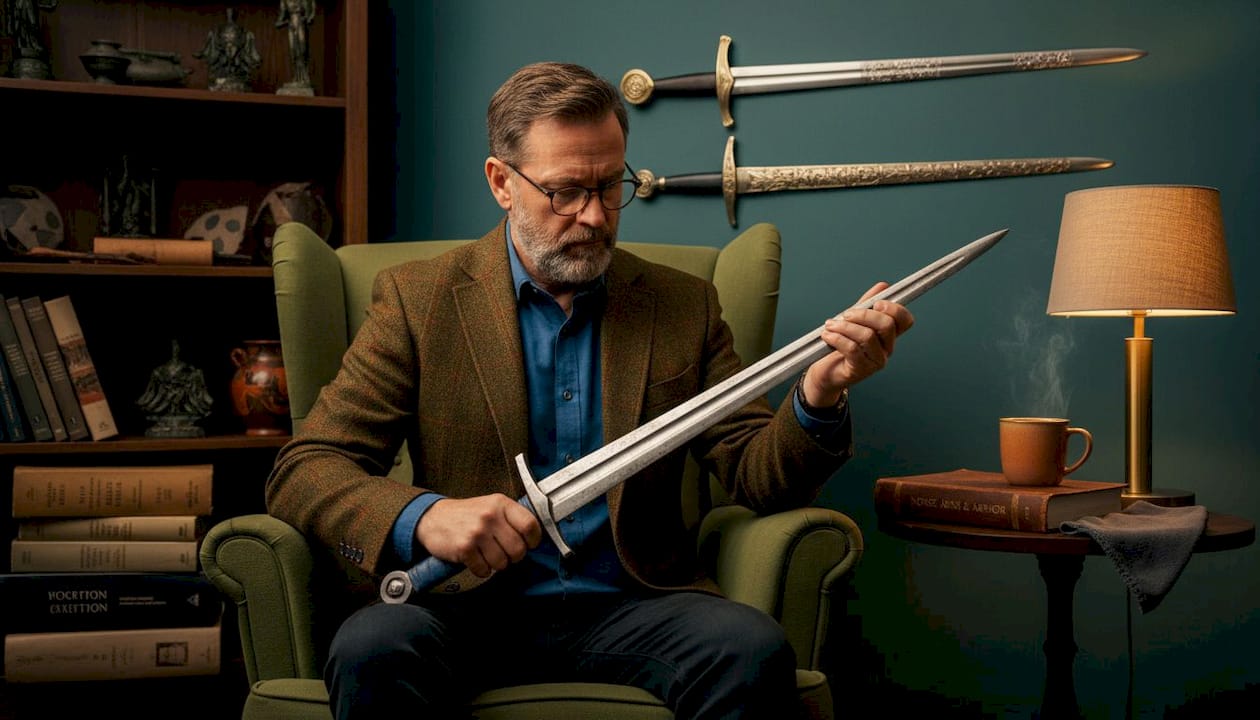
Historical-inspired replica swords like the brute Elja pattern sword occupy a fascinating middle ground. They're rooted in real artifacts but interpreted through modern craftsmanship, making them more accessible than museum-grade pieces while still carrying authentic design language. These are ideal for collectors who want historical resonance without paying archive prices.
Roman-inspired blades are gaining traction among collectors who want something outside the typical medieval European frame. A Roman-inspired gladius replica in Damascus steel is visually striking and historically significant, reflecting one of history's most effective infantry weapons in a material that wasn't available to the Romans themselves. That contrast is part of the appeal.
Here's a practical ranking of iconic sword styles by key collector priorities:
- Damascus pattern-welded swords: Best for visual impact, collectibility, and conversation value
- Viking swords with historical detail: Best for historical authenticity and cultural storytelling
- Roman-inspired replicas: Best for uniqueness within a collector's lineup and historical range
- Fantasy and anime-inspired blades: Best for cosplay and pop culture collections
- Custom engraved pieces: Best for gifting and personal meaning
Pro Tip: If you're buying for display, prioritize visual drama. If you're buying for cosplay, prioritize weight balance and proportional accuracy to the source material. These are different performance criteria that point to different swords.
Statistic callout: A Damascus blade folded just eight times produces over 256 layers of steel. Fold it twelve times and you're at over 4,000 layers. That's not just impressive math. It directly affects how light interacts with the blade surface, creating the rippling, watered-silk patterns that make Damascus visually unmistakable.
Comparing sword design techniques: Functional vs. artistic
Now that we've highlighted individual sword types, let's look at how design techniques stack up head-to-head. This comparison gives you a working framework for evaluating any blade you encounter.
| Feature | Pattern-welded Damascus | Homogeneous modern steel | Hand-forged historical replica |
|---|---|---|---|
| Visual uniqueness | Very high | Low to medium | High |
| Edge consistency | Variable | Very high | Medium |
| Collector desirability | Very high | Medium | High |
| Durability | High | Very high | Medium to high |
| Labor intensity | Very high | Low | High |
| Price range | Premium | Budget to mid | Mid to premium |
| Best use | Display and light use | Functional training | Display and historical study |
This table reveals something important: no single technique dominates every category. The right choice depends on what you're optimizing for. A collector focused purely on rarity and visual drama will lean toward Damascus. A practitioner who trains regularly may prioritize the consistency of a modern alloy. Most serious collectors end up with both.
The Viking sword tradition adds another layer of complexity. Viking-era swords with double fullers from the 8th through 12th centuries represent a fascinating manufacturing nuance. Research suggests that double fullers on these blades may result from a process where two fullers were ground to form one wider groove, sometimes leaving a central rib. Whether intentional or a manufacturing artifact, these details appear on high-quality inscribed and pattern-welded examples, signaling premium status in the original context.
This point deserves emphasis: historical manufacturing details like double fullers highlight expert nuances in swordsmithing where process traces persist in premium blades, blending function with artifact. A sword that carries the fingerprints of its making isn't imperfect. It's honest.
Key considerations when comparing techniques:
- Pattern-welded Damascus rewards collectors who display and study their blades closely; the pattern changes under different lighting
- Homogeneous steel suits buyers who want consistent performance and lower maintenance
- Hand-forged replicas offer the closest connection to historical craft traditions
"The double fuller debate in Viking swords is a reminder that even manufacturing 'accidents' can become the most prized features of a blade. Process and art are inseparable."
A handmade Viking sword built with attention to historical detail shows how a modern artisan can honor that tradition. Equally, a Roman spatha replica demonstrates how a different historical tradition produces distinct visual and structural choices, giving collectors meaningful variety within a focused collection.
Choosing the right sword: Collector and cosplay recommendations
Even after comparing techniques, the right choice depends on your collecting style and intended use. A blade that's perfect for a shadowbox display is not necessarily the right choice for a cosplay event, and vice versa.
| Use case | Recommended style | Key features to prioritize | Budget range |
|---|---|---|---|
| Wall display | Damascus or engraved | Visual drama, finish quality | Mid to premium |
| Historical study | Pattern-welded replica | Accuracy, construction detail | Mid to premium |
| Active cosplay | Anime or fantasy blade | Weight, proportions, character accuracy | Budget to mid |
| Gifting | Custom engraved | Personalization, presentation | Mid |
| Investment collection | Rare Damascus or signed | Rarity, provenance, condition | Premium |
Use this table as a starting point, not a rigid rule. Many collectors blur these categories intentionally, finding pieces that serve multiple purposes simultaneously.
Here's a practical selection process for any buyer:
- Define your primary purpose first. Display, cosplay, training, and gifting each point to different features.
- Set a realistic budget before you browse. Damascus and hand-forged pieces carry premium prices for good reason; knowing your ceiling prevents frustration.
- Study the construction details. Look for information on steel type, forging method, handle material, and finishing process.
- Consider the provenance. Blades connected to real historical traditions carry more long-term value than purely invented designs.
- Think about scale. A sword that photographs beautifully may be too large or too heavy for a specific cosplay context.
As research on Damascus steel making confirms, the labor-intensive nature of pattern-welded blades means higher costs are structural, not arbitrary. That context helps collectors make peace with premium pricing on genuine pieces.
Pro Tip: If you're torn between two swords, ask yourself which one you'd want to explain to a guest. The piece with more to say usually wins in a collection over time.
The medieval sword collection covers a wide range of styles and price points, making it a practical place to compare options side by side before committing.
Why true uniqueness requires more than artistic patterns
Here's the uncomfortable truth most new collectors discover after their first three or four purchases: visual complexity alone does not make a sword truly unique. A blade can have a stunning Damascus pattern and still feel generic if it lacks craft intent behind every decision.
The collectors whose pieces hold value, both monetary and personal, are those who learn to read the story inside the sword, not just on its surface. A double fuller on a Viking blade isn't just a groove in the metal. It's a record of decisions made in a forge over a thousand years ago, decisions that modern smiths study carefully to understand. That kind of depth doesn't photograph well, but it's felt every time you pick up the piece.
What most new collectors overlook is that manufacturing quirks and process traces are often the most valuable features of a blade. Not because they're flaws, but because they're proof of handwork. A perfectly symmetrical, machine-finished blade is consistent. A hand-forged blade with slight asymmetry in the fuller grind is real.
The historical Elja pattern replica is a strong example of this principle in action. Its value lies not just in the Damascus surface, but in the historical design language it references and the craft investment behind its proportions and construction. That's the difference between a blade you display and a blade you study.
Our recommendation: train yourself to ask how a sword was made before you ask what it looks like. The process almost always explains the appearance, and understanding that process turns casual buying into genuine collecting.
Discover modern masterpieces for your collection
Finding swords that actually deliver on the criteria this guide describes is easier when you know where to look.
At TopSwords, every piece in the catalog reflects a commitment to handcraft and design authenticity. The custom Damascus battle sword is built for collectors who want premium materials and a blade that earns attention in any display setting. For cosplay and fantasy enthusiasts, the range of authentic anime swords covers everything from iconic characters to original fantasy designs, with the weight and proportions that matter for actual wear. The full medieval sword collection brings together Viking, Roman, and European medieval styles in Damascus and high-carbon steel, giving collectors genuine variety without compromising on quality. Whatever your collecting focus, you'll find pieces here that have something real to say.
Frequently asked questions
What makes Damascus steel swords unique?
Damascus swords feature layered patterns produced by their forge-welding process, delivering superior edge retention, toughness, and visual distinctiveness that solid-steel blades simply cannot match.
Are double fullers on Viking swords intentional?
Research on Viking double-fuller swords shows that some are intentional design features while others appear to be traces of the manufacturing process, and both categories are found on high-quality, premium examples.
Is pattern-welded steel better than modern alloys?
Pattern-welded Damascus combines toughness and visual appeal through its layered structure, but modern homogeneous alloys often outperform it in consistency and predictability, making the choice dependent on your collecting priorities.
How can I identify a unique sword for cosplay?
Focus on blade silhouette accuracy, character-specific design details, and proportional weight balance to your body size, since a blade that looks right but handles poorly will limit your cosplay experience significantly.