
Walk into any kitchen store and you'll face a wall of blades in every shape, size, and steel imaginable. For home chefs, the different types of knives on display can feel paralyzing, not clarifying. The good news? You do not need all of them. Three essential knives cover the vast majority of what you will ever cook. This guide breaks down the most important knife styles, explains what each one actually does, compares construction and steel, and gives you the maintenance knowledge to keep every blade performing at its best.
Table of Contents
- Key takeaways
- 1. The chef's knife: your most used blade
- 2. The paring knife: precision in your palm
- 3. The bread knife: serrated and underestimated
- 4. Boning and fillet knives: working with meat and fish
- 5. Santoku and nakiri: Japanese-style vegetable specialists
- 6. Carving knives: built for the table moment
- 7. Tomato and utility knives: the gap fillers
- 8. Forged vs. stamped knives: what the construction tells you
- 9. German vs. Japanese steel: the performance tradeoff
- 10. Knife maintenance: sharpening, honing, and daily care
- 11. How to choose the right knives for your kitchen
- My honest take on knives after years at the cutting board
- Explore quality knives built to last from Topswords
- FAQ
Key takeaways
| Point | Details |
|---|---|
| Three knives cover most tasks | A chef's knife, paring knife, and bread knife handle roughly 90% of home cooking prep work. |
| Steel type shapes performance | German and Japanese steels differ in hardness and edge angle, affecting sharpness, durability, and care needs. |
| Specialty knives serve specific jobs | Boning, fillet, santoku, and carving knives add real value only when your cooking style demands them. |
| Honing and sharpening are not the same | Honing realigns the edge regularly; sharpening removes metal and should happen only a few times per year. |
| Fit matters more than price | Matching knife style to your cooking habits and hand size beats buying an expensive blade that does not suit you. |
1. The chef's knife: your most used blade
The chef's knife is the workhorse of any kitchen. Its broad, curved blade, typically 8 to 10 inches long, is designed for the rocking cut motion that handles mincing garlic, slicing vegetables, and breaking down poultry with equal efficiency. Most experienced cooks reach for this knife first, and for good reason.
The curved belly of the blade lets you anchor the tip on the cutting board and rock through herbs in seconds. The same knife pivots to rough-chopping onions or slicing a raw chicken breast paper thin. Blade width also gives you a useful tool for transferring chopped food from board to pan.
Pro Tip: If you can only own one kitchen knife, make it an 8-inch chef's knife in stainless steel. It will outlast trends, fit most hand sizes, and handle nearly every prep task you throw at it.
2. The paring knife: precision in your palm
A paring knife runs between 3 and 4 inches and is built for detail work done close to your hand rather than on a cutting board. Peeling apples, deveining shrimp, hulling strawberries, trimming artichoke leaves. None of these tasks are comfortable with a large blade, and that is exactly where the paring knife earns its place.
The short, stiff blade gives you tactile control that a chef's knife cannot replicate. Because you are working right at your fingertips, a well-balanced paring knife with a comfortable handle is worth spending a bit more on. Avoid blades that flex, which makes precision cuts unpredictable.
3. The bread knife: serrated and underestimated
Most home cooks underuse their bread knife, treating it as a single-purpose tool reserved for sourdough Sundays. In reality, a quality serrated blade handles tomatoes, cakes, melons, and roasted meats with ease, anywhere that a straight edge would crush rather than cut.
Serration pattern matters more than most buyers realize. Scalloped serrations cut more cleanly through delicate loaves and produce significantly less crumb debris than pointed serration patterns. If you are shopping for a bread knife, look for scalloped edges over aggressive V-shaped teeth.
Pro Tip: A 10-inch serrated knife will outlast shorter versions because you can maintain a slicing rhythm without sawing. More blade length means fewer strokes and cleaner cuts.
4. Boning and fillet knives: working with meat and fish
Once you move past the essential three, the types of knives for enthusiasts start getting specific. Boning and fillet knives are the clearest example of purpose-built design paying off in the kitchen.
A boning knife has a narrow, stiff 6-inch blade designed to follow bone contours and strip meat cleanly. A fillet knife is thinner and more flexible, bending to glide along fish skin without tearing the flesh. Using one in place of the other is workable in a pinch, but each tool genuinely makes its intended task faster and cleaner.
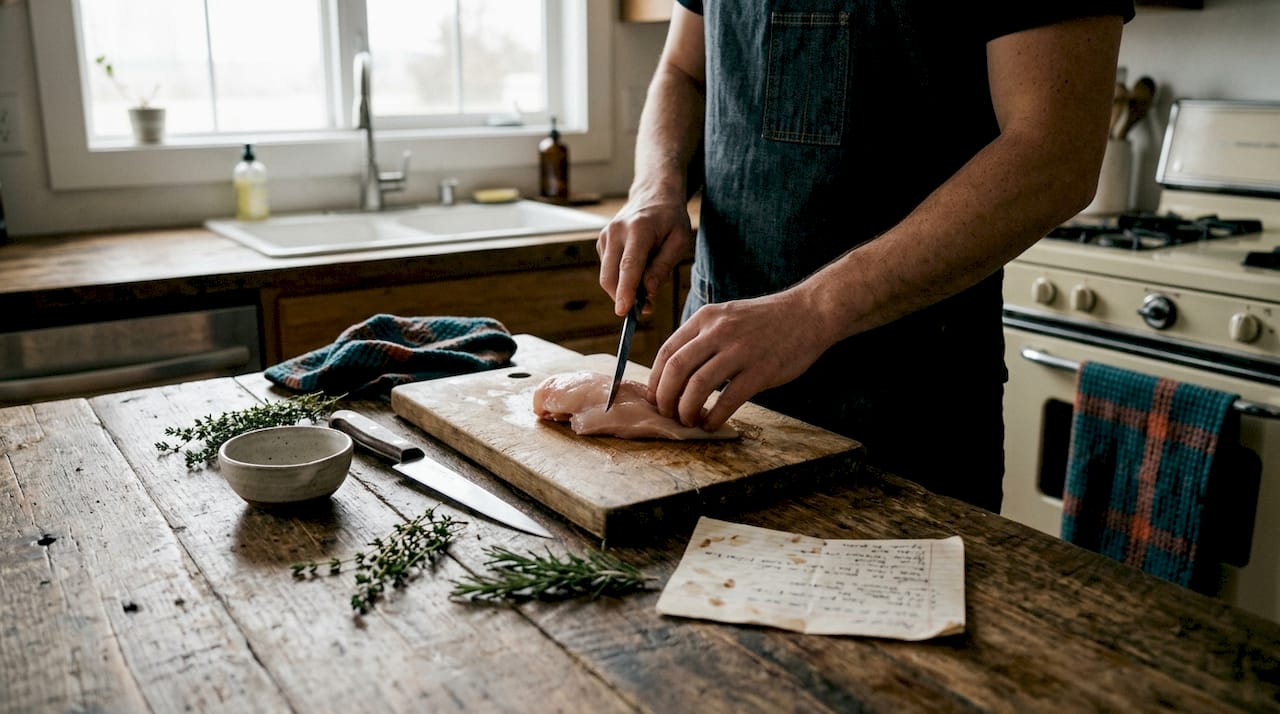
If you regularly break down whole chickens or butcher pork ribs at home, a full tang carving and fillet knife in high carbon steel will handle both tasks without compromise.
5. Santoku and nakiri: Japanese-style vegetable specialists
Japanese knife styles have earned serious respect in Western kitchens, and the santoku and nakiri are the two most practical options for home chefs who cook vegetables heavily.
The santoku is a shorter, flat-bellied alternative to the chef's knife, typically 5 to 7 inches, with a slightly downturned tip. Its flat edge profile suits the push-cut style favored in Japanese cooking rather than the rocking motion of a Western chef's knife. The nakiri goes even further, with a squared-off blade built purely for vegetable prep. No tip, no point. Just clean, straight cuts through produce from root to leaf.
Both knives often feature hollow-ground dimples along the blade, called a granton edge, which reduces food sticking during slicing.
6. Carving knives: built for the table moment
Carving knives are long, narrow, and designed specifically for slicing cooked roasts, whole birds, and holiday hams into clean, even portions. The blade length, usually 8 to 14 inches, means one stroke per slice, which gives you thin, consistent cuts without shredding the meat.
A carving fork paired with the knife holds the roast stable while you slice. This is one of those knife styles that is almost invisible until you need it, and then it becomes indispensable. Using a chef's knife on a large turkey leg is workable but clumsy. A dedicated carving knife makes the job look effortless.
7. Tomato and utility knives: the gap fillers
The utility knife sits between a paring knife and a chef's knife in length, around 4 to 7 inches, and handles mid-sized tasks awkwardly split between those two tools. Slicing sandwiches, breaking down bell peppers, cutting cheese. It is not a knife you will reach for constantly, but it fills a real gap when you have it.
Tomato knives are a specific variation with a pointed serrated blade and a forked tip for spearing slices. Tomato skin is notoriously resistant to straight edges, and a serrated tomato knife glides through skin without compressing the flesh. A small but satisfying upgrade if you cook with tomatoes daily.
8. Forged vs. stamped knives: what the construction tells you
How a knife is made matters as much as the steel it is made from. Forged knives are shaped from a single piece of steel, heated and hammered into form. This process creates a denser grain structure and typically results in better balance, more weight toward the handle, and longer-lasting edge retention.
Stamped knives are cut from a flat sheet of steel and then heat-treated. They are lighter, more affordable, and perfectly capable for everyday cooking. The best kitchen knives for beginners are often stamped stainless steel because they require minimal care and hold up well without babying. Forged knives reward users who understand maintenance and want a blade that improves with age.
Pro Tip: Check for a bolster, the thick metal collar between blade and handle. Forged knives almost always have one. It signals weight and balance quality at a glance.
9. German vs. Japanese steel: the performance tradeoff
Understanding knife blade variations in steel type is where most buyers get confused. The short version is this: German steel is tougher, Japanese steel is sharper.
German knives use softer steel, typically rated at 56 to 58 on the Rockwell hardness scale, with edge angles ground to around 20 to 25 degrees per side. That softness means the edge chips less on hard ingredients but dulls faster. Japanese knives use harder steel, rated 60 to 65 HRC, with thinner edge angles of 15 to 17 degrees. The result is a razor edge that holds longer but is more brittle under lateral stress.
| Feature | German steel | Japanese steel |
|---|---|---|
| Hardness (HRC) | 56 to 58 | 60 to 65 |
| Edge angle | 20 to 25 degrees | 15 to 17 degrees |
| Sharpness | Moderate | Very high |
| Chip resistance | High | Moderate |
| Maintenance effort | Lower | Higher |
| Best for | Tough prep, versatile use | Precision slicing, vegetable work |
10. Knife maintenance: sharpening, honing, and daily care
Sharp knives are safer knives. Dull blades require more force to cut, and that extra force is what sends the blade sideways and into fingers. Keeping your edges maintained is not just about performance. It is about safety every time you cook.
The distinction between honing and sharpening trips up most home cooks. Honing realigns the blade edge without removing metal. Run your knife along a honing steel before each cooking session to keep the edge straight. Sharpening actually removes metal to create a new edge and should happen far less often, maybe three or four times a year for a well-used knife.
Here are the core maintenance habits every home chef should build:
- Hone before cooking. Two to three passes on a honing steel each session adds weeks of life to your edge.
- Wash by hand. Dishwashers brutalize blade edges and damage handles. Hand washing with mild soap takes ten seconds.
- Dry immediately. Especially for carbon steel knives, even brief moisture exposure causes staining and rust.
- Use a wooden or plastic cutting board. Glass and ceramic boards destroy edges faster than anything else in your kitchen.
- Never use your knife as a pry tool. Misusing blades for prying or scraping chips edges and permanently alters blade geometry.
Pro Tip: Apply a thin coat of food-safe mineral oil to carbon steel blades after drying. It takes seconds and prevents the oxidation that ruins expensive knives in months.
You can find more detailed blade care techniques in this knife and blade maintenance guide that covers everything from edge geometry to storage.
11. How to choose the right knives for your kitchen
Knowing how to choose a knife comes down to three honest questions. How do you cook? How often do you cook? And how much maintenance are you willing to do?
Matching knife style to your cooking habits and hand size matters far more than buying the most expensive option on the shelf. A passionate home baker who makes bread weekly needs a quality serrated knife more than a boning knife. Someone who cooks whole fish regularly should prioritize a fillet knife over a carving knife.
| Cook type | Recommended knives | Steel preference |
|---|---|---|
| Beginner home cook | Chef's, paring, bread | Stainless steel (low maintenance) |
| Vegetable-focused cook | Santoku or nakiri, paring | Japanese steel if comfortable with care |
| Meat and fish enthusiast | Chef's, boning, fillet, carving | High carbon or German steel |
| Serious home chef | Full set including specialty | Mix of German and Japanese |
Budget guidance is straightforward. Spend most of your knife budget on a chef's knife, then a paring knife, then a bread knife. Fill in specialty knives as your cooking evolves, not all at once. A single well-made Damascus chef's knife will outperform a drawer full of cheap blades every time.
My honest take on knives after years at the cutting board
I have watched home cooks spend hundreds on knife sets they never use, keeping two or three blades tucked in a wooden block while the rest collect dust. In my experience, the temptation to buy comprehensive is strong but rarely rewarded.
What I have actually learned is this: a knife you maintain will always beat a knife you neglect, regardless of what it cost. I have seen a forty-dollar carbon steel chef's knife in the hands of someone who hones it daily outcut a premium Japanese blade that gets tossed in the dishwasher. The care habit matters more than the purchase.
My advice to any home chef is to start with three knives, learn them completely, and add specialty blades only when you notice a specific task that keeps frustrating you. That frustration is the honest signal that a new tool is actually worth it. Buying ahead of the need usually means buying the wrong thing.
The other thing I tell people is to hold a knife before buying it if you can at all. Balance, weight, and handle shape are personal preferences that no review can solve for you. A heavier German-style blade feels reassuring to one cook and exhausting to another. Trust your grip over someone else's ranking.
— Top
Explore quality knives built to last from Topswords
Whether you are building your first kitchen setup or adding specialty blades to an already solid collection, the knives you use every day deserve genuine craftsmanship behind them.

Topswords carries a curated selection of kitchen knives ranging from handcrafted Damascus steel chef's knives to precision carving and fillet sets. Every blade in the collection is built with full tang construction and real-world use in mind, not just display. If you are ready to upgrade from a blade that barely holds an edge, browse the Topswords knife collection and find the steel that fits how you actually cook.
FAQ
What are the three most important types of knives?
A chef's knife, paring knife, and serrated bread knife cover roughly 90% of prep tasks for most home cooks. These three different knife types handle everything from mincing herbs to slicing crusty bread cleanly.
What is the difference between German and Japanese kitchen knives?
German knives use softer steel with a more durable edge, while Japanese knives use harder steel ground to a thinner angle for greater sharpness. Japanese blades hold their edge longer but are more prone to chipping under hard lateral force.
How often should you sharpen kitchen knives?
Most home cooks only need to sharpen their knives three to four times per year. Regular honing before each cooking session keeps the edge aligned between sharpenings and significantly extends time between full sharpening sessions.
What is the difference between honing and sharpening?
Honing uses a steel rod to realign the blade's edge without removing metal, while sharpening uses a whetstone or sharpener to grind away metal and create a new edge. Overusing electric sharpeners shortens knife lifespan faster than most people expect.
Is stainless steel or carbon steel better for home chefs?
Stainless steel is the better choice for most home chefs because it resists rust and requires minimal maintenance. Carbon steel offers superior sharpness and edge retention but demands immediate drying and regular oiling to prevent rust and staining.