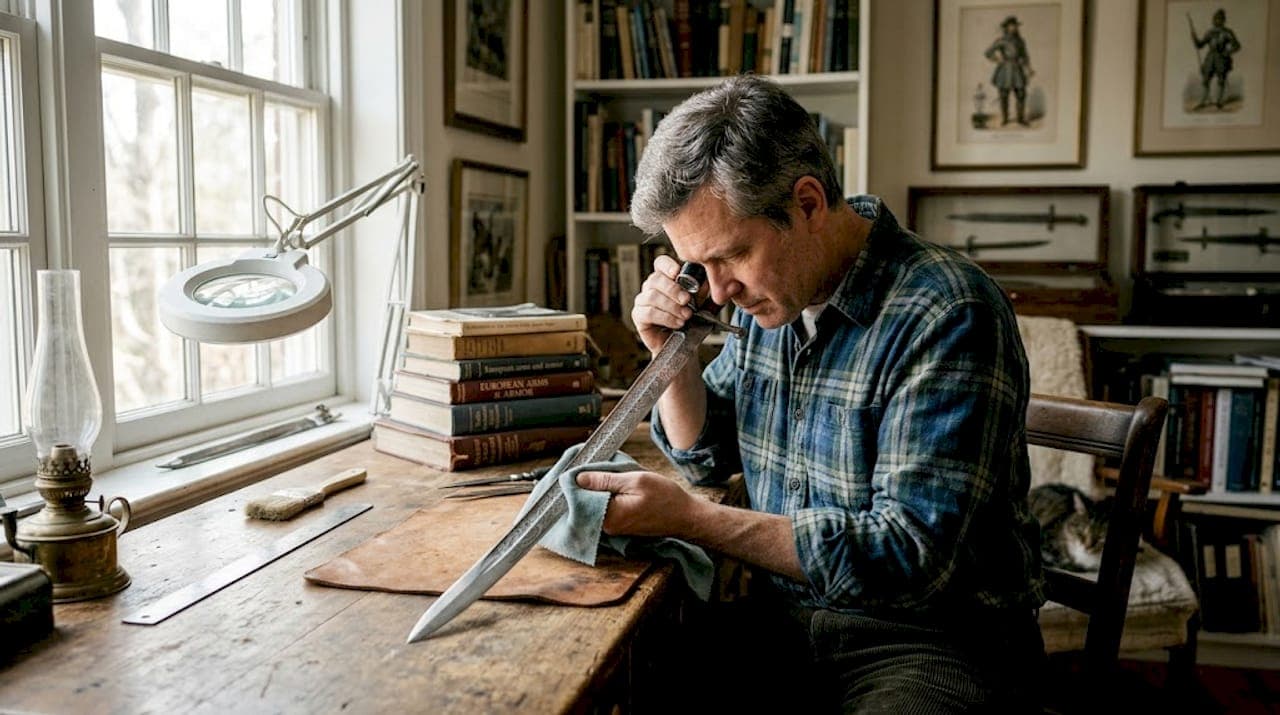
Choosing the right engraving for a collector sword is harder than it looks. The blade's visual appeal is obvious, but the engraving technique beneath the surface shapes everything from long-term durability to historical authenticity. A shallow surface etch and a true deep inlay can look identical in a photograph yet behave completely differently over decades of display. This guide breaks down the major sword engraving types, including damascening, acid etching, chasing, and repoussé, explains how each method works, and gives you the criteria you need to make a confident, informed choice for your collection.
Table of Contents
- Engraving criteria: Artistry, technique, and durability
- Damascening: Gold and silver inlay masterwork
- Acid etching: Historic and modern blade customization
- Chasing, repoussé, and traditional engraving: Surface artistry
- What collectors miss about sword engraving value
- Explore customized swords with premium engravings
- Frequently asked questions
Key Takeaways
| Point | Details |
|---|---|
| Technique authenticity | Authentic engraving methods such as true inlay offer superior durability and collector value. |
| Customization options | Acid etching provides affordable customization, but deep inlay or chasing techniques are ideal for lasting ornamentation. |
| Collector tips | Inspect engraving depth and maintenance history before purchasing for collection or display. |
| Comparison matters | Use comparison tables to evaluate artistry, durability, and price across major engraving types. |
Engraving criteria: Artistry, technique, and durability
Before you spend serious money on an engraved sword, you need a framework for evaluation. Three pillars matter most: artistry, technique, and durability. Getting all three right separates a lasting centerpiece from a disappointing display piece.
Artistry covers design complexity and cultural significance. A geometric Islamic pattern carries different weight than a flowing Japanese floral motif, even if both took the same number of hours to produce. Ask yourself whether the design connects to the sword's historical period and region. Mismatched aesthetics, a Viking-style blade with Mughal floral inlay, for example, reduce authenticity and collector value regardless of how skilled the execution is.
Technique refers to the actual method used to create the engraving. The main options you'll encounter include:
- Inlay (damascening): Metal wire or sheet pressed into engraved grooves
- Acid etching: Chemical removal of metal using an acid-resistant mask
- Chasing: Displacing metal from the front surface with punches
- Repoussé: Raising metal from the back to create relief
- Traditional engraving: Direct cutting or removal of metal with a graver tool
Each method produces a distinctive look and behaves differently with time, temperature, and humidity. Understanding which technique was used is not just an academic exercise. It directly predicts how the piece will age.
Durability is where many collectors get surprised. Not all engravings are built equally, and true deep inlay outlasts shallow koftgari methods, which can loosen or oxidize over time. Shallow surface work looks beautiful when new but can degrade within years if exposed to humidity or handling. Deep groove inlay, where wire is hammered into precisely cut channels, bonds mechanically to the base metal and holds its integrity for generations.
If you're exploring gifting ideas alongside collecting, the sword gift insights at TopSwords offer useful context on what makes a sword both meaningful and lasting.
Pro Tip: Always ask the seller to confirm the specific technique used, not just the style name. "Damascening" can refer to anything from true deep groove inlay to a basic surface scratch with wire laid on top.
Damascening: Gold and silver inlay masterwork
Damascening is the collector's gold standard for engraved swords, literally and figuratively. The technique involves inlaying precious metals, typically gold or silver wire, into grooves cut or etched into a steel base. The result is a design that sits inside the blade or fitting rather than sitting on top of it.
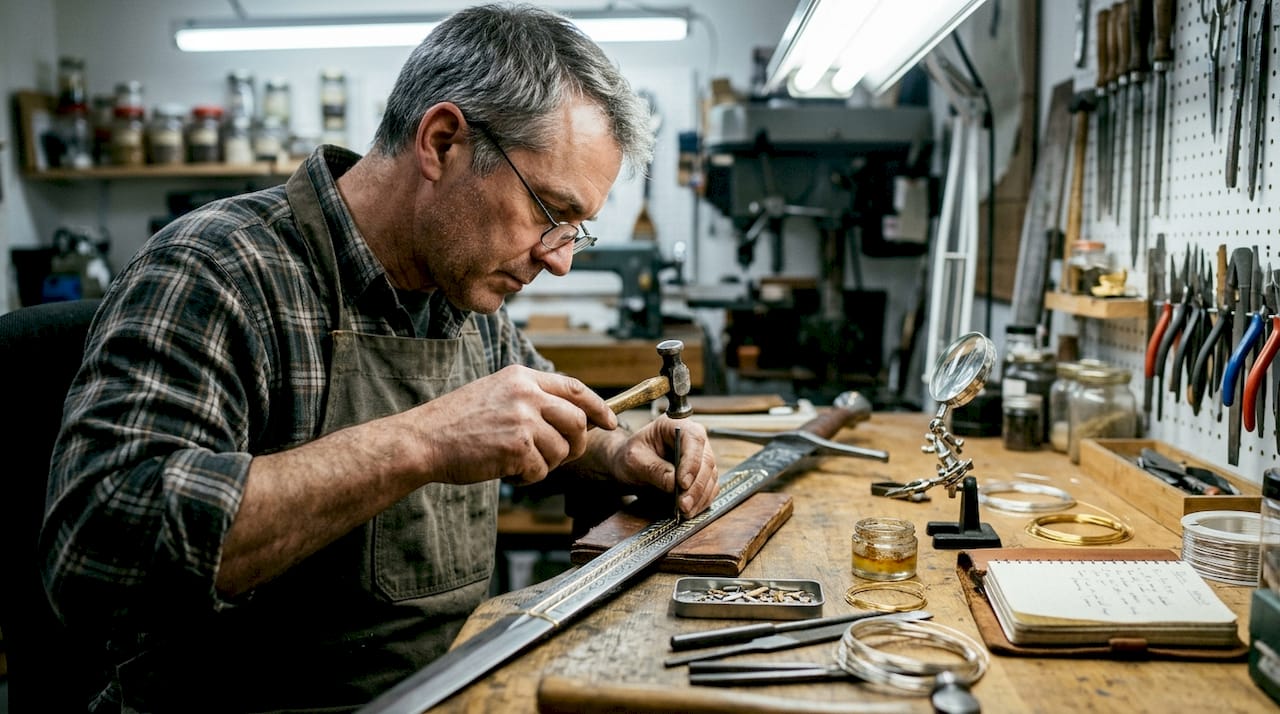
Japanese damascening (zogan) takes several distinct forms. Nunome creates a cloth-like texture by hammering fine wire into crosshatched grooves. Takaniku produces high-relief designs that stand above the base metal surface. Both traditions demand extraordinary precision and are typically applied to sword fittings like tsuba (hand guards) rather than the blade itself.
Persian and Indian koftgari damascening works differently. Shallow koftgari uses crosshatch scoring and wire hammering to grip the surface, a beautiful technique but one that relies on friction rather than mechanical bonding. Teh-i-nishan, the true deep groove variant, cuts actual channels into the blued steel and forces wire into those channels. This method was used on historical swords and armor because it actually holds.
Key features to look for in collector-grade damascening:
- Visible depth at the inlay edges when viewed at an angle
- Clean, unbroken wire lines without lifting or gapping
- Consistent color in the precious metal (tarnish patterns reveal age and authenticity)
- Cultural motifs that match the sword's regional origin
| Feature | Japanese damascening | Persian/Indian (koftgari) |
|---|---|---|
| Method | Wire into crosshatch grooves | Surface or deep groove inlay |
| Common metals | Gold, silver | Gold on blued steel |
| Durability | High (Takaniku), Moderate (Nunome) | Low (shallow), Very high (teh-i-nishan) |
| Collector value | Very high | High to very high (deep inlay) |
| Typical application | Fittings, tsuba | Blades, armor, hilts |
If you want to handle a sword that showcases this kind of intricate surface metalwork, the damascene pattern sword at TopSwords is a strong reference point for understanding how inlay interacts with the blade's structure.
Pro Tip: When examining a damascened piece, hold it under raking light at a low angle. True deep inlay will cast a slight shadow along its edges. Surface-applied wire looks flat under the same light.
Acid etching: Historic and modern blade customization
Acid etching takes a completely different approach. Instead of adding material to a blade, it removes it. The process involves applying an acid-resistant coating, called a resist, in the desired pattern, then exposing the unprotected metal to acid. Acid etching uses nitric acid to eat into the metal surface, creating a recessed design that can then be filled with color, left raw, or polished to contrast with the surrounding steel.
Historically, this technique decorated European blades with maker's marks, heraldic symbols, and commemorative inscriptions. Spanish and German blade makers of the 16th and 17th centuries used acid etching extensively for ornate motifs on ceremonial swords. The method allowed complex imagery that would have taken prohibitively long with purely manual engraving tools.
Modern applications are equally varied. Custom logos, initials, detailed artwork, and fantasy imagery are all achievable through acid etching at a cost point far below inlay work.
Pros of acid etching:
- More affordable than inlay techniques
- Extremely flexible in terms of design complexity
- Can reproduce fine line art and detailed imagery
- Works well for personalization and commemorative pieces
Cons of acid etching:
- Shallower than inlay, making it less durable over time
- Prone to filling with grime if not sealed or maintained
- Cannot replicate the three-dimensional quality of deep inlay
| Category | Acid etching | Deep inlay damascening |
|---|---|---|
| Cost | Lower | Higher |
| Durability | Moderate | Very high |
| Design flexibility | Very high | Moderate |
| Collector value | Moderate | High to very high |
| Historical use | European, ceremonial | Persian, Indian, Japanese |
For a hands-on example of acid etching applied to a historical replica, the acid etched gladius shows how the technique translates to Roman-inspired blades. You can also browse the wider medieval swords collection for comparison, or examine the roman spatha example to see etching used alongside other surface treatments.
Chasing, repoussé, and traditional engraving: Surface artistry
These three techniques form the backbone of classical metalworking on sword fittings, guards, pommels, and ornamental hilts. They're often used together, and understanding each one separately helps you recognize the level of craft in any given piece.
Chasing works by displacing metal from the front surface using hardened punches and a hammer. The metal is not removed. It is pushed sideways or compressed, creating defined lines and textures. This makes it ideal for fine details and linear designs on relatively thin metal.
Repoussé is chasing's counterpart. The metalworker pushes from the back surface, raising the front into three-dimensional relief. The result is sculptural, with shapes that stand above the surrounding surface. Repoussé is responsible for the dramatic raised figures and motifs you see on elaborate European guard work and Asian sword fittings.
Traditional engraving removes metal entirely, cutting clean channels with a graver or burin (a sharpened, hardened steel tool). The result is precise, fine-line detail that neither inlay nor chasing can fully replicate. These three methods are often combined on sword fittings, where repoussé raises the primary form, chasing adds surface definition, and engraving cuts in the fine detail.
A typical workflow when combining all three looks like this:
- Anneal (soften) the metal to prepare it for shaping
- Apply repoussé from the back to raise major forms and figures
- Use chasing from the front to sharpen and define raised edges
- Finish with engraving to add fine lines, hatching, and lettering
- Polish or patinate the surface to bring out the contrast between levels
"The finest sword fittings in history were never the product of a single technique. Chasing, repoussé, and engraving reinforce each other, each covering what the others cannot achieve alone."
For a striking example of how these techniques come together on a complete sword, the dragon hilt design at TopSwords shows layered surface artistry on a collector-grade piece.
What collectors miss about sword engraving value
Most collectors walk into their first serious purchase focused almost entirely on visual appeal. That's understandable. A glittering gold inlay or a deeply etched blade image is the thing that stops you in your tracks. But appearance at the point of purchase is a poor predictor of long-term satisfaction.
The uncomfortable truth is that shallow koftgari can loosen and oxidize within years, while true teh-i-nishan deep groove inlay holds its bond across generations. The difference is invisible in photos and nearly invisible in person unless you know what to look for.
Oxidation is chronically underestimated. Collectors in humid climates who store swords without proper maintenance can watch a shallow inlay degrade noticeably within a decade. A true deep groove inlay on the same blade in the same environment survives without intervention far more reliably.
Provenance matters just as much as the technique itself. A sword with documented origin, a named workshop or artisan, a regional tradition, or a historical period reference carries verifiable context that shallow decorative pieces simply cannot match. Before any significant purchase, ask for provenance documentation and research the maker. The sword collector advice at TopSwords is a useful starting point for understanding what questions serious collectors ask before buying.
Explore customized swords with premium engravings
If this guide has sharpened your eye for engraving quality, the next step is seeing these techniques applied to real collector-grade pieces.
At TopSwords, you'll find swords that bring together true craftsmanship and authentic engraving methods. The damascus steel sword showcases the kind of layered surface work that rewards close inspection. If medieval styles are your focus, the full shop medieval swords collection covers a wide range of engraved hilts and blade treatments. For something with Middle Eastern flair, the scimitar sword example illustrates how inlay and surface work translate to curved blade traditions. Custom engraving options are also available for those building a truly personalized collection.
Frequently asked questions
What engraving type is most valued by collectors?
Collectors usually favor true deep inlay methods like teh-i-nishan damascening for their durability and resistance to oxidation because shallow inlay can loosen over time, reducing long-term value.
How does acid etching compare to inlay engravings?
Acid etching uses nitric acid on a masked surface, making it more affordable and design-flexible, but it lacks the mechanical bond and longevity of deep groove inlay techniques.
Can chasing and repoussé techniques be combined on a sword?
Yes, and they almost always are on high-quality pieces. These techniques are combined on sword fittings to layer three-dimensional relief, surface definition, and fine line detail into a single cohesive design.
Why does the authenticity of engraving technique matter for collectors?
Authentic technique determines how the piece ages, how historically accurate it is, and how it holds its market value. True deep inlay outperforms shallow surface work in every long-term durability test, which is why serious collectors always verify the method before buying.