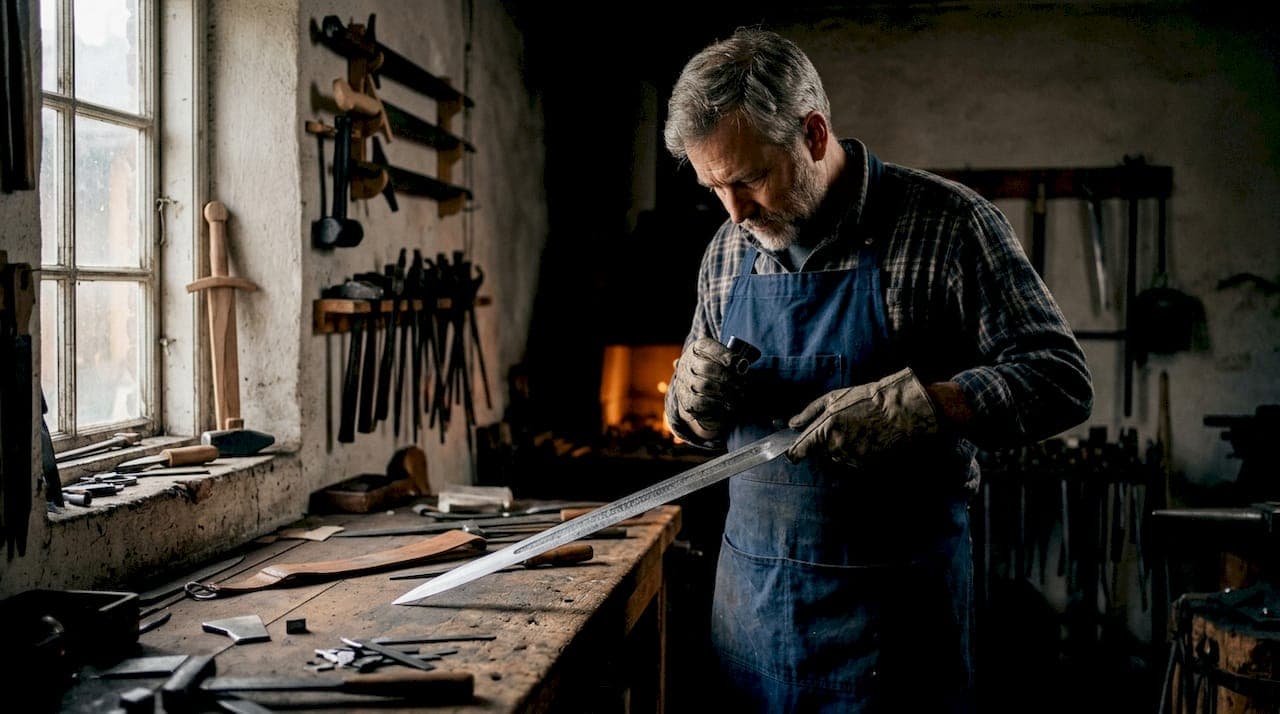
Most people assume a sword is simply heated metal that gets hammered into shape and sharpened. That picture misses almost everything that matters. Japanese swordsmithing describes sword craftsmanship as the traditional, skill-based process of designing and making blades through material selection, metal forming, heat treatment, grinding, finishing, and final assembly, all targeting a specific balance of hardness, toughness, geometry, and aesthetics. For collectors, cosplayers, and display enthusiasts, understanding that balance is what separates a meaningful piece from a wall decoration that could have been stamped out by a factory machine.
Table of Contents
- What is sword craftsmanship?
- Key steps in traditional swordmaking
- How craftsmanship differs: Japanese vs. European swords
- Craftsmanship for collection, cosplay, and display
- The truth most collectors miss about sword craftsmanship
- Upgrade your collection with real craftsmanship
- Frequently asked questions
Key Takeaways
| Point | Details |
|---|---|
| Craftsmanship is layered | True swordmaking combines technical skill, traditional methods, and a careful choice of materials to balance function and beauty. |
| Traditions shape results | Japanese and European swords have distinct processes but similar underlying goals—durability, edge quality, and unique appearance. |
| Purpose matters most | Consider what you value—historical accuracy, performance, or aesthetics—when collecting, cosplaying, or displaying swords. |
| Documentation adds value | Provenance and craftsmanship details make swords more collectible and easier to verify for future enthusiasts. |
What is sword craftsmanship?
Sword craftsmanship is far more than a romantic idea about fire and hammers. It is a disciplined process where every decision, from the carbon content of the steel to the angle of the final polish, affects how the blade performs and how it looks. A craftsman who skips even one stage or rushes a heat treatment can end up with a blade that shatters under pressure or loses its edge after a single use.
The foundational process covers material selection, forming, heat treatment, finishing, and assembly, each carrying specific tradeoffs between hardness, toughness, geometry, and aesthetics. That word "tradeoffs" is important. A harder blade holds an edge longer but is more brittle. A tougher blade absorbs shock but may flex in ways you don't want. Every master swordsmith makes conscious choices at each stage to achieve the best combination for the sword's intended purpose.
Here is what true craftsmanship involves at its core:
- Material knowledge: Understanding steel grades, carbon content, and alloy additions that affect how metal behaves under heat and stress
- Forging skill: Physically shaping steel so its grain structure aligns for strength, not weakness
- Heat treatment discipline: Controlling temperature within tight windows to achieve hardness without sacrificing flexibility
- Geometry judgment: Grinding and shaping the blade profile for balance, cutting geometry, and visual presence
- Finishing and aesthetics: Polishing to reveal the internal structure, applying surface textures, and completing the furniture (hilt, guard, grip)
"The goal is a balance of hardness, toughness, geometry, and aesthetics." This is not a poetic description. It is an engineering statement about tradeoffs that every serious collector should understand before buying or evaluating a sword.
The best part? You don't have to be a metallurgist to appreciate this. Once you know what to look for, you can see evidence of craftsmanship decisions in the blade itself.
Key steps in traditional swordmaking
Knowing what craftsmanship means, it's helpful to understand how masters actually create these swords, step by step. Each stage builds on the one before it, which means a mistake early on cannot always be corrected later.
-
Material selection: The swordsmith chooses a steel type suited to the tradition and the sword's intended role. High-carbon steel is common for edges because it hardens well. Some traditions use layered or composite steels that combine hard and tough zones in a single blade.
-
Forging: The smith heats the steel and shapes it with repeated hammer blows. In Japanese tradition, forging and folding the steel many times removes impurities and creates a refined, layered structure. European smiths used different approaches, including pattern welding, where multiple steel rods are twisted and welded together to create flowing visual patterns in the finished blade.
-
Heat treatment: This is arguably the most critical stage, and the one most often misunderstood. The smith heats the blade to a precise temperature, then quenches it (cools it rapidly, typically in water or oil). The rate of cooling determines whether the steel becomes hard martensite, tough pearlite, or something in between. Japanese smiths apply clay to the spine before quenching, which slows the cooling there and creates the iconic hamon, the visible temper line running along the edge.
-
Grinding and shaping: After heat treatment, the blade is ground to its final geometry. This step defines the cross-section profile, the hollow grind, flat grind, or convex grind, each of which changes how the sword cuts, resists impact, and feels in the hand. A well-ground blade has a consistent taper from base to tip.
-
Polishing and finishing: Japanese sword polishing alone is a specialized craft that can take many days on a single blade. The goal is to reveal the grain structure, the hamon, and any pattern welding, while also removing every scratch and imperfection. European swords may be polished to a mirror shine or given a satin finish depending on the tradition.
-
Assembly: The completed blade receives its furniture. Guard, grip, pommel, and sometimes a sheath or scabbard are fitted and secured. Each component should be proportionate, secure, and consistent with the blade's overall character.
Pro Tip: If you collect handmade swords, document the process details for every piece you acquire. Provenance (documented origin and creation history) can meaningfully increase resale value and gives you a richer story to share with other enthusiasts. Some collectors keep a simple notebook or digital folder per sword.
If you want to see how these steps translate into a finished product, look at hand-forged cosplay swords that show every stage's results in the final piece.
How craftsmanship differs: Japanese vs. European swords
With the stages outlined, examining how global traditions approach swordmaking expands your collector's insight. Two of the most studied and collected traditions are Japanese and European, and their differences reveal how culture, available materials, and intended use all shape the final blade.
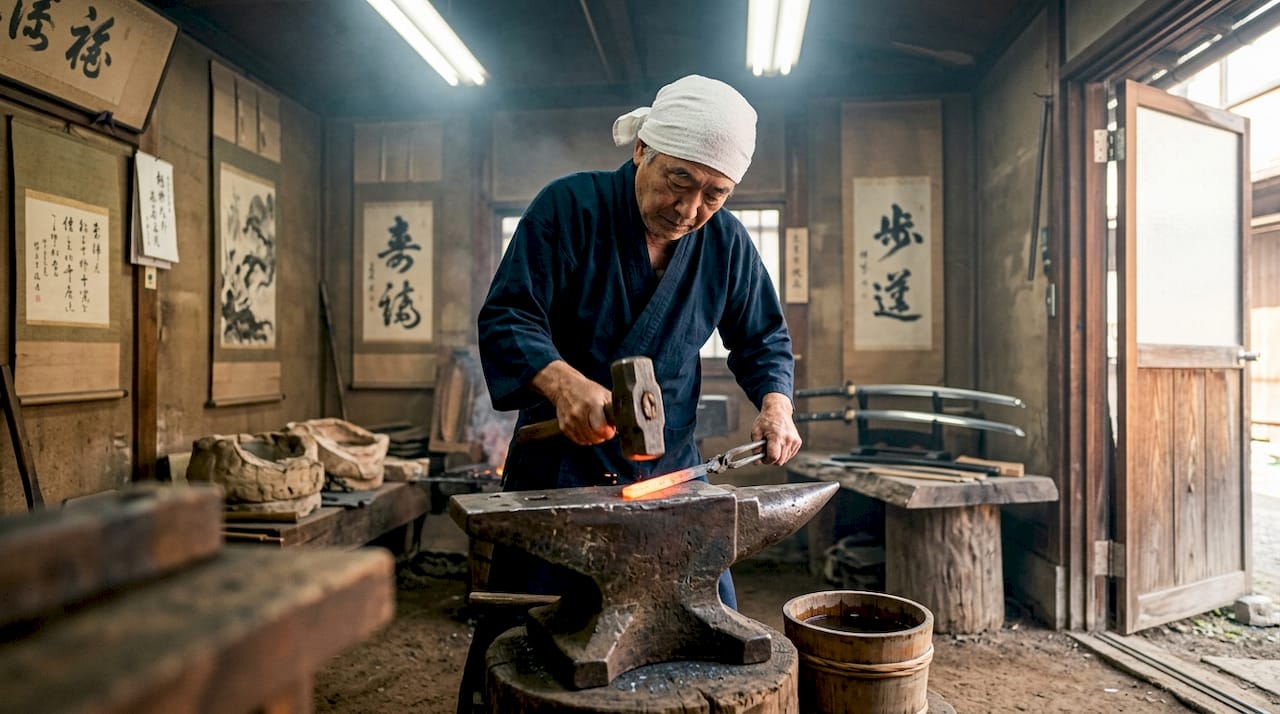
Japanese craftsmanship centers on the concept of tamahagane, a steel smelted from iron sand in a traditional furnace. The smith folds and works this steel repeatedly, developing a layered structure and refining grain size. The differential hardening process creates a hard cutting edge alongside a more flexible spine, a combination that gives the katana its legendary balance between sharpness and resilience. The visible hamon is not decoration added after the fact. It is direct physical evidence of the heat treatment process.
European craftsmanship developed along different lines. Pattern welding, used extensively in early medieval Europe, involved twisting and welding rods of iron and steel together. This produced flowing visual patterns in finished blades while also managing the inconsistent iron quality available at the time. As steel quality improved in later centuries, European smiths shifted toward single-steel blades with complex geometry, including fullers (the groove often mistakenly called a "blood groove") that reduce weight without removing structural material.
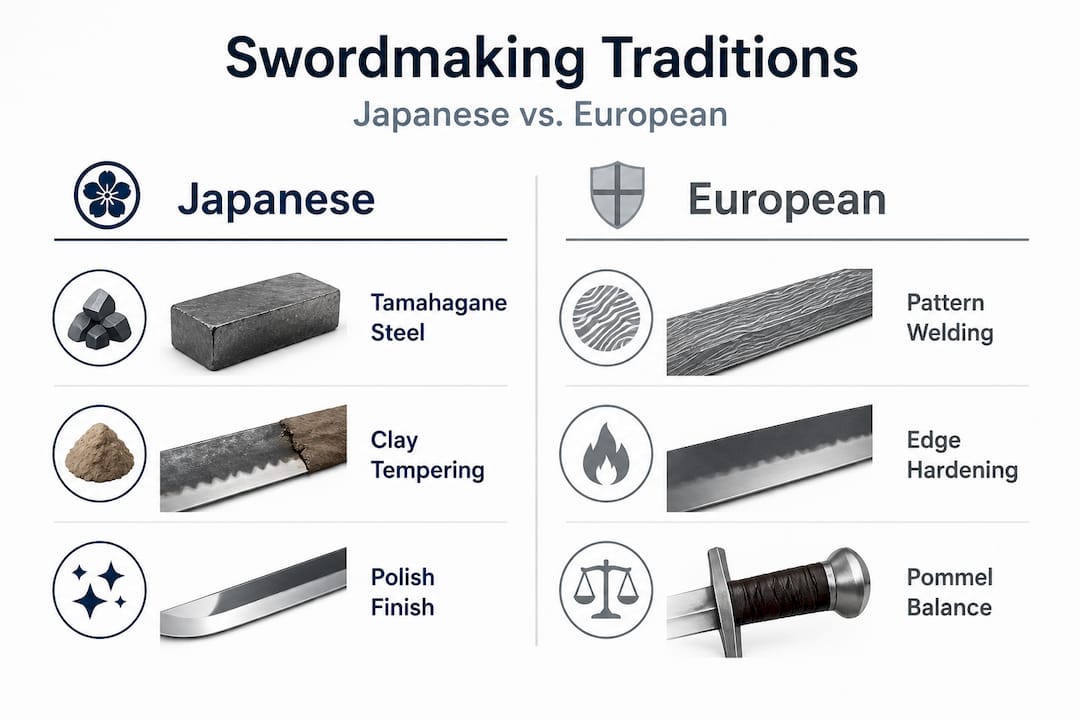
| Feature | Japanese tradition | European tradition |
|---|---|---|
| Primary steel source | Tamahagane from iron sand | Iron ore, later improved steel |
| Folding/layering | Extensive | Present in pattern welding |
| Heat treatment style | Differential hardening with clay | Even hardening or regional quench |
| Visible signature | Hamon temper line | Pattern weld, fuller, crossguard |
| Blade geometry | Single-edged, curved | Single or double-edged, varies widely |
| Hilt design | Minimalist, wrapped grip | Ornate crossguard, pommel |
What both traditions share is a commitment to controlling microstructure through forging and heat treatment, using visible aesthetics as a natural byproduct of sound process rather than surface decoration applied independently.
Some key shared values across both traditions:
- Respecting the properties of the specific steel being worked
- Using heat treatment to optimize the blade's performance profile
- Treating finishing as a final expression of what the internal structure already contains
- Building furniture that complements rather than competes with the blade
If you're drawn to the decorative complexity of Celtic sword craftsmanship or want to begin exploring medieval swords as a category, these differences will give you a framework for evaluating what you find.
Craftsmanship for collection, cosplay, and display
Understanding cultural differences, let's connect this knowledge to modern uses and what matters to enthusiasts like you. Sword craftsmanship doesn't live only in museums or historical reenactments. It shows up every time someone buys a handmade piece for their display case, carries a replica to a convention, or adds a meaningful blade to a growing collection.
The interesting thing is that different use cases genuinely prioritize different aspects of craftsmanship. A structural performance sword built for cutting practice demands precise heat treatment outcomes and correct geometry. A display or cosplay sword can place more emphasis on visual detail, specific aesthetics, and materials chosen for safety or budget.
| Use case | Top priorities | Secondary priorities |
|---|---|---|
| Serious collector | Historical accuracy, provenance, materials | Aesthetics, display quality |
| Cosplayer | Visual accuracy to source material, weight, safety | Durability, ease of handling |
| Display enthusiast | Finish quality, detail, overall presence | Historical accuracy, materials |
| Functional practitioner | Heat treatment, geometry, steel quality | Aesthetics, hilt design |
Here are quick tips for evaluating a sword based on your purpose:
- For collecting: Ask specifically about the steel type, heat treatment method, and the smith's background. A reputable maker will answer these questions comfortably.
- For cosplay: Check the weight distribution and handle comfort first. Visual accuracy matters, but a sword that's uncomfortable to carry for hours at a convention quickly loses its appeal.
- For display: Look closely at the finish under different lighting conditions. Scratches, uneven polish, and inconsistent bevels are all signs of rushed finishing work.
- For any purpose: Always ask whether the blade has been assembled with proper fitting between blade, guard, and handle. A rattling or loose assembly suggests shortcuts in the final stage.
Pro Tip: Ask every seller for documentation on materials and techniques. This matters both for authenticity verification and resale value down the line. A brief note from the maker describing the steel type and heat treatment used is worth keeping with the sword for as long as you own it.
Blades designed specifically for visual impact, like an anime cosplay sword, can still reflect genuine craftsmanship decisions in their finishing and construction even when the design priorities differ from a battle-ready piece.
The truth most collectors miss about sword craftsmanship
Equipped with practical criteria, here's the side of sword collecting most guides miss. The mainstream conversation about sword craftsmanship almost always gravitates toward visible features. The Damascus pattern. The hamon. The intricate crossguard. And while those elements are genuinely beautiful, they are symptoms of good process, not the process itself.
The real craftsmanship is happening where you can't easily see it. Steel grain size, carbon distribution, the specific temperature at which a blade was quenched, whether the tempering cycle was completed properly after hardening. These invisible decisions determine whether a blade will hold an edge under real use, flex and return rather than snap under lateral force, or remain balanced in the hand after thousands of swings. When a skilled smith says that true craftsmanship lives in the microstructure and aesthetics are just one result of disciplined process, that is not false modesty. It is a precise description of how these things work.
Most collectors, even experienced ones, fall into the trap of paying a premium for pattern complexity while overlooking signs of poor heat treatment or incorrect geometry. A stunning Damascus scimitar with incorrect heat treatment will lose its edge faster and risk fracture under stress compared to a plainer blade that was processed correctly. Visual complexity and quality are not the same thing, though the best pieces give you both.
What to look for beyond the surface when evaluating a sword as an investment:
- Edge geometry consistency: Run your eye along the bevel from base to tip. Inconsistencies indicate grinding shortcuts.
- Handle security: No movement between blade and guard under moderate pressure is non-negotiable.
- Maker documentation: Any serious craftsman keeps records. No documentation often means no process.
- Finish uniformity: Polishing reveals what's underneath. Inconsistent finish often hides inconsistent heat treatment.
- Weight distribution: A well-made sword has intentional balance. If it feels tip-heavy or handle-heavy in a way that feels wrong, the geometry may be off.
The collectors who build genuinely valuable collections over time are the ones who train themselves to ask invisible questions, not just admire visible results.
Upgrade your collection with real craftsmanship
If you're inspired to apply your new understanding, see what modern sword artisans offer. At TopSwords, every piece we carry reflects choices made at each stage of the craftsmanship process: the steel selected, the heat treatment applied, the finishing completed by hand.

Whether you're after custom handmade battle swords that demonstrate serious structural craftsmanship or want to browse an anime sword collection where visual accuracy and hand-finishing meet, you'll find pieces built by artisans who understand the tradeoffs covered in this article. We focus on swords that give you something worth understanding, not just something worth hanging on a wall. Every product page includes materials and construction details so you can ask the right questions and get real answers.
Frequently asked questions
What makes a sword 'handcrafted' versus 'mass-produced'?
A handcrafted sword is made through traditional, skilled steps like forging, heat-treating, and hand-finishing, while a mass-produced sword is generally cut and shaped by machines, missing the unique touches and process decisions of a craftsman.
Why do collectors value traditional swordmaking techniques?
Collectors prize traditional techniques because forging and heat treatment create both functional performance and visible structural features that machines cannot replicate, making each piece genuinely unique.
Are authentic techniques still used in swords for cosplay or display?
Many cosplay and display swords mimic traditional steps for aesthetics, but craftsmanship for display commonly separates structural performance priorities from visual ones, focusing on finish, safety, and accuracy to a source design.
How can I verify if a sword was made using traditional craftsmanship?
Ask for specific documentation covering the steel type, forging method, and heat treatment process. Reputable makers provide clear answers because they track provenance as a standard part of their craft practice.