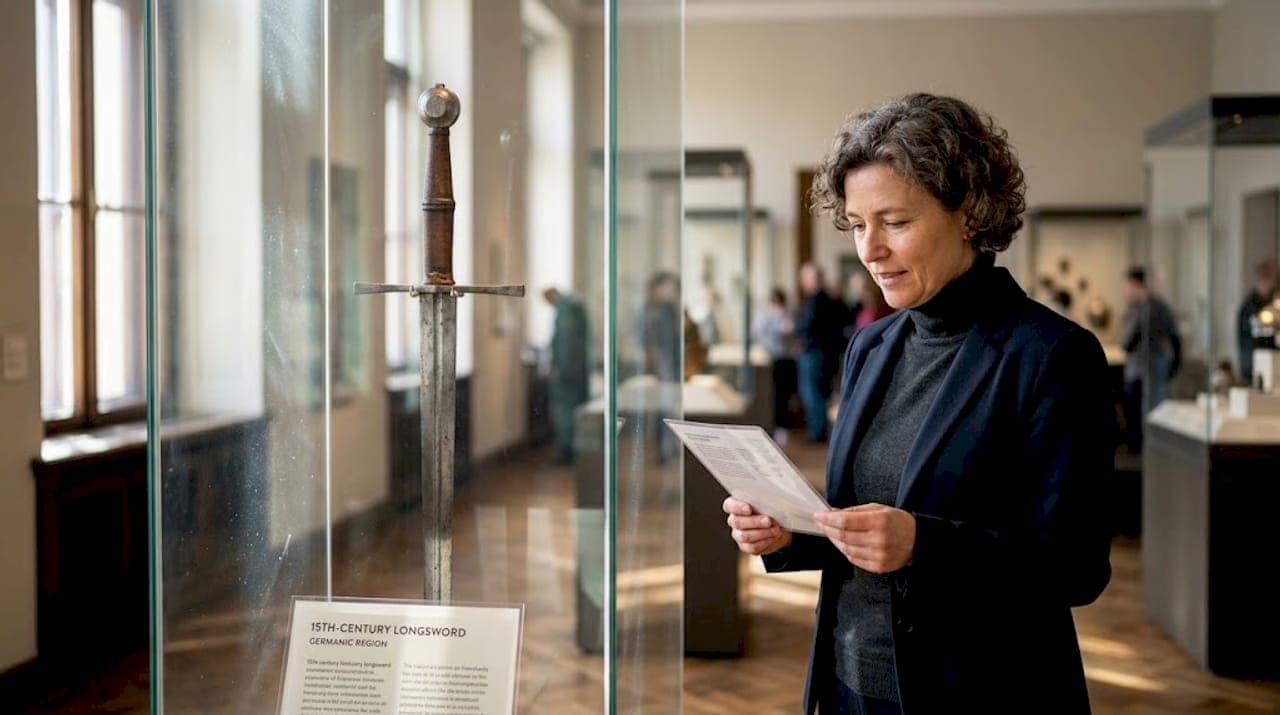
Most sword enthusiasts can point to a longsword in a museum display or a fantasy film and feel confident they know what they're looking at. The reality is more surprising. The term "longsword" is widely misused, applied to almost any long, double-edged blade regardless of period, origin, or function. True longswords occupy a very specific place in European martial history, defined by precise measurements, combat roles, and cultural context that most casual fans never encounter. This guide cuts through the confusion, walking you through the real definition, the fascinating evolution, and the enduring appeal of one of history's most iconic weapons.
Table of Contents
- Defining the longsword: Features and terminology
- The evolution of the longsword: Form, function, and history
- The art of longsword combat: Swordplay and technique
- Longswords today: Collecting, craftsmanship, and fantasy appeal
- A collector's perspective: Why the longsword endures
- Explore quality longswords and replicas
- Frequently asked questions
Key Takeaways
| Point | Details |
|---|---|
| True definition | A longsword is a European sword with a two-handed grip, straight double-edged blade, and distinct historical context. |
| Design evolution | Longswords evolved in response to armor innovations and feature various subtypes with specific combat uses. |
| Historical techniques | Expert masters taught longsword fighting with an emphasis on timing, leverage, and adaptable techniques. |
| Modern appeal | Collectors value detailed craftsmanship, while the sword’s legacy also thrives in fantasy and reenactment communities. |
Defining the longsword: Features and terminology
The word "longsword" sounds self-explanatory, but the history behind the term is anything but simple. The label gained traction largely through 19th-century fencing manuals and later through modern collectors and historical reenactors. Today it serves as a practical umbrella term for a specific class of European sword, even though medieval fighters themselves used regional names like "espée de guerre" or simply referred to the weapon by its function.
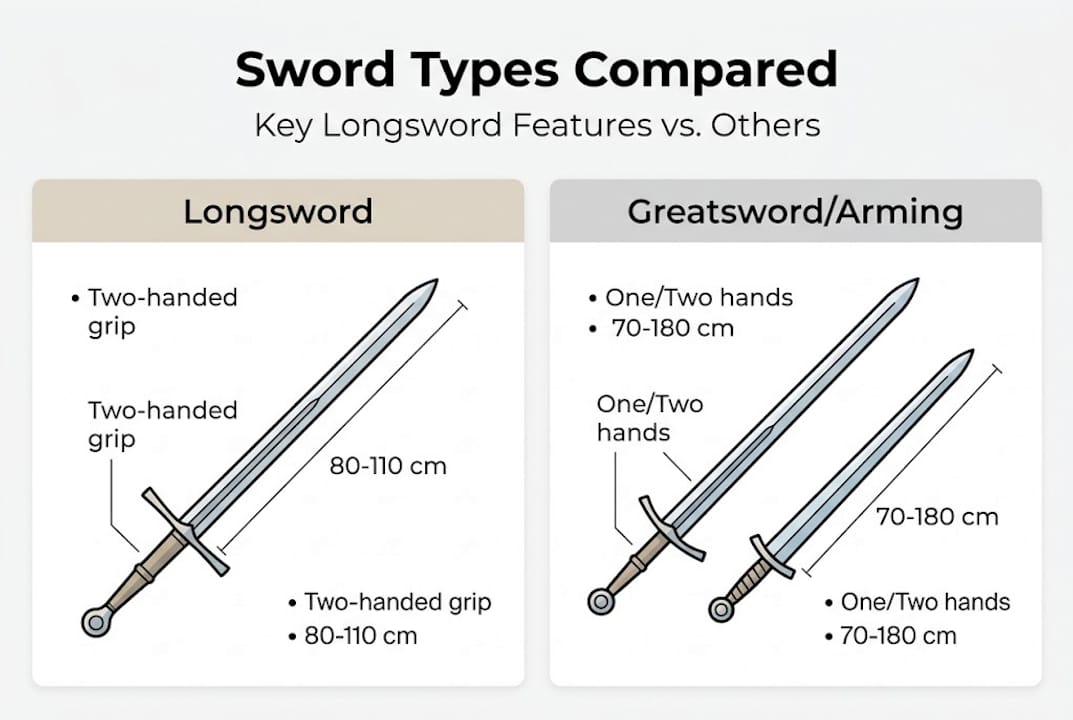
According to its longsword definition, a longsword is a type of European sword characterized by a cruciform hilt with a grip for primarily two-handed use (15-30 cm), a straight double-edged blade (80-110 cm), and a weight of 1.1-3 kg. That grip length is the key detail most people miss. It's what separates a longsword from a one-handed arming sword and keeps it distinct from the massive two-handed greatsword.
Here's a quick breakdown of the defining physical features:
- Blade: Straight, double-edged, typically 80-110 cm long
- Grip: Long enough for two hands, usually 15-30 cm
- Hilt: Cruciform (cross-shaped) guard, often with a wheel or brazil-nut pommel
- Weight: Between 1.1 and 3 kg, making it surprisingly light for its size
- Point: Ranges from rounded (early cutting types) to acute (later thrust-focused types)
A lot of collectors confuse longswords with arming swords, bastard swords, and greatswords. Arming swords are one-handed and shorter. Greatswords are significantly heavier and longer, meant for two hands exclusively with no real option for single-hand use. Bastard swords, sometimes called "hand-and-a-half swords," sit right at the edge of the longsword category. The lines blur, which is exactly why terminology matters when you're browsing European sword replicas or comparing pieces in a collection.
| Feature | Longsword | Arming sword | Greatsword |
|---|---|---|---|
| Blade length | 80-110 cm | 70-80 cm | 120-180 cm |
| Grip length | 15-30 cm | 9-14 cm | 30-45 cm |
| Weight | 1.1-3 kg | 0.9-1.4 kg | 2-4 kg |
| Primary use | One or two hands | One hand | Two hands only |
For context, a historical short sword sits well below these measurements, which illustrates just how much variety existed in European blade culture.
The evolution of the longsword: Form, function, and history
With the idea of the longsword defined, it's essential to see how these features changed in response to history and technology. The longsword didn't appear overnight. It evolved gradually in response to battlefield realities, particularly the spread of plate armor across Europe.
Early longswords before the 14th century are actually quite rare. The historical context makes clear that early "longswords" were not a dominant trend, and the true type emerged in the 14th century as plate armor pushed swordsmiths to design blades capable of finding gaps in metal protection rather than simply cutting through it. That shift from slashing to thrusting changed everything.
Here's a simplified timeline of key development periods:
- Pre-14th century: Broader, cutting-focused blades; longswords rare and not yet a defined category
- 14th-15th century: True longsword emerges; blades narrow and stiffen for thrusting; grip extends for two-hand leverage
- 15th-16th century: Peak refinement; fencing schools flourish; regional variations multiply
- Late 16th-17th century: Longsword declines as firearms dominate; transitions into civilian fencing swords
The Oakeshott typology, developed by historian Ewart Oakeshott, gives collectors and researchers a structured way to classify these changes. The Oakeshott typology classifies longswords across types like XIIa/XIIIa (early cutting-focused), XVa/XVIa (thrust-optimized), and XVIIIb/c (later refined forms), confirming that "longsword" is not a uniform category but a spectrum of designs.
"Not all long swords are longswords. Regional naming, period differences, and the cutting-to-thrusting shift mean that two swords labeled 'longsword' in a museum can look radically different from each other."
This is why broadsword and claymore variants often get grouped loosely with longswords in popular culture, even though they represent distinct regional traditions with their own design logic.
Pro Tip: When evaluating a replica for period accuracy, check the blade profile first. A wide, flat blade with a rounded tip signals an early cutting-type longsword. A narrow, stiff blade with a sharp point is a later thrust-focused design. Mixing these features in one piece is a red flag for historical inaccuracy.
The art of longsword combat: Swordplay and technique
Understanding its evolution leads naturally to the longsword's most compelling aspect: how it was actually used in combat. This is where the longsword truly separates itself from every other sword type.
Longsword longsword technique was used in armored combat on foot and horseback, and it transitioned into formalized fencing, with techniques from masters like Johannes Liechtenauer and Fiore dei Liberi emphasizing leverage and timing over raw strength. That's the core insight most people miss: a longsword fight was not about hacking harder than your opponent.
Two historical masters defined the Western tradition:
- Johannes Liechtenauer (14th-15th c.): German master whose cryptic verses formed the foundation of the Liechtenauer tradition, emphasizing initiative, economy of motion, and simultaneous offense and defense
- Fiore dei Liberi (c. 1409): Italian master whose illustrated manual "Flos Duellatorum" documented techniques for armored and unarmored combat, wrestling, and mounted fighting
Core longsword techniques include:
- Half-swording: Gripping the blade with one hand to control the point in armored combat
- Murder stroke (Mordschlag): Flipping the sword to strike with the pommel or crossguard, effective against plate armor
- Zornhau (Wrath cut): A diagonal cut that simultaneously attacks and deflects
- Bind and wind: Controlling the opponent's blade through leverage at the point of contact
Modern Historical European Martial Arts (HEMA) practitioners study these exact techniques using blunt steel or nylon trainers. The medieval sword replicas community has grown significantly alongside HEMA interest, with clubs now active across North America and Europe.
Pro Tip: If you're new to HEMA or reenactment, focus on footwork before blade work. Every historical master emphasized that positioning and timing create the opening. Strength alone closes nothing.
Longswords today: Collecting, craftsmanship, and fantasy appeal
Having seen how longswords were used, let's connect that history to today's collector markets and the sword's cultural afterlife. The longsword is arguably the most recognized sword silhouette in modern popular culture, appearing in everything from "The Witcher" to "Dark Souls" to major film franchises.
The modern interpretations of the longsword reveal an interesting tension: the term itself is largely a modern construct from 19th-century fencing manuals, with historical names varying widely by region, and the category sits on a continuum with arming swords and greatswords rather than as a rigid type.
For collectors, that nuance matters. Here's what to look for when evaluating a longsword for your collection:
- Steel type: High-carbon steel (1075, 1095, or Damascus) signals functional quality; stainless steel is better for display
- Full tang construction: The blade should extend fully through the handle for structural integrity
- Blade geometry: Check for distal taper (blade narrows toward the tip) and correct profile for the period
- Hilt proportions: Guard and pommel should balance the blade, not just look decorative
- Provenance or maker reputation: Know who made it and to what standard
The fantasy market has created a massive appetite for longsword replicas, and that's not a bad thing. Fantasy sword replicas serve a real purpose for cosplay, display, and gifting, as long as buyers understand what they're getting. A Damascus sword for collectors bridges both worlds, offering genuine craftsmanship with visual drama that appeals to history buffs and fantasy fans alike.
The longsword's symbolic weight is real. It represents a specific moment in human history when martial skill, metallurgy, and formal fighting systems converged into something elegant and deadly. That combination is hard to replicate in any other object.
A collector's perspective: Why the longsword endures
Most people come to longswords through a film or a game. That's a perfectly valid entry point, but it's also where a lot of misconceptions take root. The cinematic longsword is usually oversized, impossibly sharp, and wielded with pure aggression. The historical longsword is almost the opposite: balanced, precise, and designed for a fighter who trained for years.
What we've noticed at TopSwords is that collectors who invest time in understanding the real history get far more satisfaction from their pieces. A Richard Lionheart sword isn't just a display object when you understand the period it represents. It becomes a conversation starter, a study in metallurgy, and a connection to a specific human story.
The uncomfortable truth about collecting is that budget and authenticity rarely align perfectly. Our honest advice: prioritize craftsmanship and historical accuracy over visual drama. A well-made replica with correct proportions and quality steel will always outlast and outshine a flashy piece built for looks alone. The longsword endures because it rewards people who look deeper.
Explore quality longswords and replicas
If this history has sparked the urge to own a piece of it, you're in the right place. At TopSwords, we carry handcrafted longswords and replicas built for collectors, reenactors, and display enthusiasts who care about quality as much as aesthetics.

Our selection spans historically inspired pieces and fantasy-influenced designs, all built with attention to blade geometry, balance, and material quality. Whether you want a functional trainer or a striking display piece, start with our leather belt scabbard longsword for a complete, ready-to-display setup. For something with cinematic flair and genuine Damascus craftsmanship, the Aragorn Strider sword is one of our most popular pieces among collectors who want both worlds.
Frequently asked questions
What makes a sword a 'longsword'?
A longsword features a straight, double-edged blade (80-110 cm), a cruciform hilt, and a grip long enough for primarily two-handed use (15-30 cm), with a weight of 1.1-3 kg.
How is a longsword different from a greatsword or arming sword?
Longswords are lighter and more versatile than greatswords and have longer grips than arming swords. The regional naming continuum shows that these categories blur historically, but grip length and weight are the clearest practical dividers.
Were longswords only used in medieval Europe?
Longswords originated in Europe and saw use from roughly 1050 to 1700, spanning late medieval through early modern periods across multiple regions.
What combat techniques are specific to longswords?
Key techniques include half-swording, the murder stroke, and bind-and-wind methods. Masters like Liechtenauer and Fiore built entire systems around leverage and timing rather than strength.